
Insulated Curtains for Cold Storage: Enhancing Efficiency and Protection
Cold storage is vital across industries—from food and pharmaceuticals to logistics and scientific research. A seemingly simple yet powerful tool in this space is insulated curtains. These curtains act as flexible thermal barriers in cold rooms, offering energy savings, temperature control, hygiene, and operational efficiency. This article explores their purpose, benefits, and best practices for implementation.
What Are Insulated Curtains in Cold Storage?
Definition and Materials
Insulated curtains are flexible barrier systems installed at entrances, doorways, or partition zones within cold storage areas. Unlike bare PVC strips, they are constructed with multiple layers or foam cores that deliver high insulation through an “R-value” similar to conventional structural walls
Types of Insulated Curtains
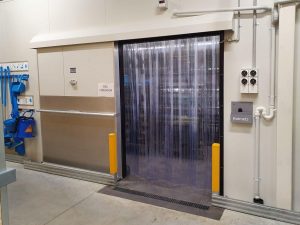
– **PVC Strip Curtains**: Overlapping plastic strips that reduce temperature exchange while enabling forklift and foot traffic
Why Insulated Curtains Matter in Cold Storage
1. Energy Efficiency and Cost Reduction
Every time a cold room door opens, warm air floods in, forcing chillers to work harder. Insulated curtains act as secondary seals—reducing heat flow by up to 30–40% and slashing energy use by around 25–33%
2. Temperature Stability and Product Quality
Cold storage must maintain precise thermal ranges (e.g., meat, dairy, vaccines). Curtains create a “cold lock,” minimizing fluctuations and protecting product integrity
3. Hygiene and Contamination Control
Made from food-grade PVC or antimicrobial fabrics, insulated curtains act as barriers against dust, pathogens, and pests. Many products meet HACCP and FDA hygiene standards
4. Operational Efficiency and Safety
Curtains—especially PVC strips or sliding panels—allow easy access for workers and machinery. They often feature clear vision strips for improved visibility, reducing collisions and increasing workflow speed
Additional Benefits of Insulated Curtains
Reduced HVAC Wear and Maintenance
Stable interior temperatures reduce chiller cycling, prolonging equipment lifespan and lowering maintenance costs
Minimized Condensation and Safety Hazards
Preventing warm air ingress reduces condensation and ice formation—key for slip safety and clean surfaces
Modularity and Adaptability
Modular curtain walls (like FlexTherm® or Energy Shield) are deployable, removable, and foldable. They can adapt to seasonal or operational layout changes without project delays or
Durability and Long-Term Savings
Designed for industrial use, many insulated curtains (e.g. MT Cold Stop®) last 5–6 times longer than standard PVC, reducing replacement costs
Selecting the Right Insulated Curtain System
1. Match Type to Usage
– **High-traffic zones:** choose durable PVC strip curtains, optional polar-grade for deep freeze environments
2. R-value and Temperature Separation
Select panels with R-values suitable for your temperature differential (e.g., R‑6 to R‑15). Curtain walls offer flexibility from medium to high insulation levels
3. Hygiene and Safety Standards
Specify food-grade and/or antimicrobial materials, and consider clear strip inserts for visibility
4. Custom Fit and Installation
Proper sizing ensures full coverage. Overlapping PVC strips by ~50 mm and mounting ceiling-to-floor reduces leakage. Tracks or sliding rails might be needed for rigid panels
5. Maintenance and Lifecycle Planning
Install in high-traffic zones? Inspect strips/panels regularly and replace worn parts. Clean with detergent; vinyl is washable
Case Examples
AmCraft Insulated Curtain Walls
These non-strip curtain systems can match freezer-wall R-values, are modular, and allow top-valance configurations to tailor installations
Steel Guard Energy Shield Curtains
Featuring 3M Thinsulate® cores, fold-away and static options across R‑3 to R‑15, designed for freezer-cooler-ambient transitions. Panels fold away to ⅓ size for bulk access
Goff’s Climate Curtain Walls
Ceiling-mounted curtain systems with full warranties and designed to quickly partition climates and reduce heat loss
Installation & Maintenance Best Practices
Ensure Proper Fit and Seal
Curtains must seal from ceiling to floor with sufficient overlap or compression to avoid thermal gaps
Regular Cleaning Routines
Clean strips and surfaces weekly with mild detergent to prevent buildup, maintain hygiene, and reduce thermal loss
Replace Damaged Components Promptly
In high-traffic areas, worn or torn strips/panels degrade performance. Regularly replace parts to maintain energy savings
Use Complementary Technologies
Combine insulated curtains with air curtains (up to 85% air infiltration reduction) or automated door systems to enhance performance
Conclusion
Insulated curtains are not a basic accessory—they’re a strategic solution for cold storage. Offering dramatic energy savings, temperature consistency, hygiene control, and workflow flexibility, these systems optimize operations and protect integrity. Whether strip curtains, insulated panel walls, or modular track systems, choosing the right product and maintaining it well ensures long-term benefits.
By understanding types, installation needs, and maintenance essentials, facilities can “chill smart”—achieving operational efficiency, compliance, and sustainable cost savings.
Recent Comments