
Choosing the Right Support Frame for Cold Rooms
Cold rooms play a vital role in industries that require temperature-controlled environments, such as food storage, pharmaceuticals, agriculture, and logistics. These specialized spaces must maintain consistent temperatures while supporting heavy equipment, insulation panels, and stored products. One of the most important structural elements that ensures the reliability and durability of a cold room is its support frame.
Choosing the right support frame for a cold room is essential for maintaining structural stability, protecting insulation systems, and ensuring safe operation. A well-designed support frame helps distribute weight evenly, withstand extreme temperature conditions, and extend the lifespan of the cold storage facility.
Understanding the key factors involved in selecting the right support frame can help businesses build more efficient, reliable, and long-lasting cold storage rooms.
The Importance of Support Frames in Cold Rooms
Support frames act as the structural backbone of a cold room. They hold the insulated wall panels, ceiling systems, refrigeration equipment, and storage units in place while maintaining overall stability.
Unlike standard rooms, cold rooms are designed with thick insulated panels that help maintain internal temperatures. These panels can be heavy, especially in large commercial cold storage environments. Without a proper support frame, the weight of these panels and the equipment inside the room could place excessive strain on the structure.
Support frames also help maintain the alignment of panels, prevent movement, and ensure the insulation system works efficiently. Choosing the right frame ensures the cold room remains structurally secure while operating at low temperatures.
Key Factors to Consider When Choosing a Support Frame
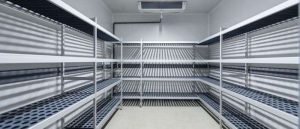
Selecting the right support frame requires careful consideration of several structural and environmental factors. Each cold room installation may have unique requirements depending on its size, purpose, and operating temperature.
Room Size and Layout
The size and layout of the cold room significantly influence the type of support frame required. Larger rooms typically require stronger framing systems to support wider spans and heavier loads.
For example, large industrial cold rooms used in warehouses often require reinforced structural frames that can support ceiling panels, refrigeration units, and heavy storage racks. Smaller walk-in cold rooms may require simpler framing systems, but they still need adequate strength to maintain stability.
A well-planned layout also ensures that support frames do not interfere with storage systems, doorways, or refrigeration equipment.
Load-Bearing Requirements
Cold rooms must support various loads, including insulated panels, ceiling systems, refrigeration units, lighting, shelving, and stored products. These loads can be significant, especially in facilities that store large quantities of goods.
When choosing a support frame, it is important to calculate the total load that the structure will carry. Engineers often consider both static loads, such as wall panels and shelving, and dynamic loads, such as equipment vibration and movement within the room.
Selecting a frame with sufficient load-bearing capacity ensures the structure remains stable and prevents long-term structural stress.
Common Materials Used for Cold Room Support Frames
The material used for the support frame plays a critical role in determining the strength, durability, and performance of the cold room structure. Certain materials perform better in low-temperature environments and offer greater resistance to corrosion and structural damage.
Steel Frames
Steel is one of the most common materials used for cold room support frames. It provides excellent strength and durability, making it suitable for large commercial and industrial cold storage facilities.
Steel frames can support heavy loads and maintain structural integrity over long periods. They are also resistant to deformation under pressure, which helps prevent structural movement that could affect insulation performance.
Additionally, steel frames can be coated or treated to protect against corrosion caused by moisture or condensation inside cold storage environments.
Aluminum Frames
Aluminum is another popular material for cold room framing systems. While it is lighter than steel, aluminum still provides strong structural support and offers excellent resistance to corrosion.
Because of its lightweight properties, aluminum is often used in smaller cold rooms or modular cold storage systems. It is easier to handle during installation and can simplify construction in certain applications.
Aluminum frames are also highly resistant to rust, making them suitable for environments with high humidity levels.
Temperature and Environmental Considerations
Cold rooms operate in environments with low temperatures and high humidity levels. These conditions can affect building materials and structural components over time.
Choosing a support frame that can withstand these conditions is essential for maintaining structural integrity.
Resistance to Temperature Changes
Cold rooms often experience temperature fluctuations during operation, maintenance, or defrost cycles. These changes can cause materials to expand and contract.
Support frames must be able to handle these temperature variations without warping, cracking, or weakening. Materials like steel and aluminum are often chosen because they maintain their structural properties in cold environments.
Protection Against Moisture and Condensation
Moisture and condensation are common in cold storage facilities due to the temperature difference between the interior and exterior environments. If not properly managed, this moisture can lead to corrosion or structural damage.
Support frames should be designed with protective coatings or corrosion-resistant materials to ensure long-term durability in these conditions.
Compatibility with Insulation Panels
Insulation panels are essential components of any cold room because they help maintain internal temperatures and reduce energy consumption. The support frame must be compatible with the insulation system used in the facility.
Frames should allow panels to be installed securely while maintaining tight connections between sections. This prevents gaps that could allow warm air to enter the cold room.
Properly aligned panels also reduce the workload on refrigeration systems, helping the facility operate more efficiently.
Ease of Installation and Maintenance
The design of the support frame can affect how easily a cold room is installed and maintained over time. Efficient installation can reduce construction costs and minimize downtime during facility setup.
Modular framing systems are often preferred because they allow for faster assembly and easier expansion if additional cold storage space is required in the future.
Frames should also allow easy access to refrigeration equipment, lighting systems, and electrical components for maintenance and repairs.
Flexibility for Future Expansion
Many businesses eventually expand their cold storage capacity as demand grows. Choosing a support frame system that allows for expansion can save time and money in the future.
Modular frames and adaptable designs make it easier to add new panels, extend existing cold rooms, or integrate additional refrigeration equipment.
Ensuring Safety and Compliance
Cold storage facilities must meet certain safety and structural standards to ensure safe operation. Choosing the right support frame helps meet these requirements and reduces potential risks.
A well-designed frame provides stable structural support for all components inside the cold room. This reduces the risk of panel movement, structural stress, or equipment failure.
Professional engineering and proper load calculations help ensure the frame system complies with building codes and safety regulations. This is particularly important in large commercial facilities where structural integrity is critical.
Conclusion
Choosing the right support frame for a cold room is a crucial step in building a reliable and efficient cold storage facility. The support frame provides the structural foundation that holds insulated panels, refrigeration equipment, shelving systems, and stored products in place.
Factors such as room size, load requirements, material selection, environmental conditions, and insulation compatibility all play a role in determining the most suitable frame system. By carefully evaluating these elements, businesses can ensure their cold rooms remain stable, energy-efficient, and durable over time.
Investing in a high-quality support frame not only protects the structure of the cold room but also improves operational performance and reduces long-term maintenance costs. For facilities that depend on consistent temperature control, selecting the right support frame is an essential part of successful cold storage design.
Recent Comments