
How Inflatable Dock Seals Help Meet Food Safety Standards
Food safety standards in modern supply chains are stricter than ever. As global demand for fresh, frozen, and processed foods continues to grow, regulators and industry bodies have placed increasing emphasis on maintaining hygienic, temperature-controlled environments throughout storage and transportation. One of the most critical—but often overlooked—control points is the loading dock.
Inflatable dock seals play a key role in helping food facilities meet food safety standards by reducing contamination risks, maintaining temperature stability, and improving overall hygiene at the interface between trucks and warehouses. This article explores how these systems support compliance and strengthen food safety outcomes.
The Importance of Food Safety in Cold Chain Logistics
Food safety is not just about final product handling—it depends on maintaining controlled conditions at every stage of the supply chain. Loading docks represent a high-risk zone where external contaminants and temperature fluctuations can compromise safety.
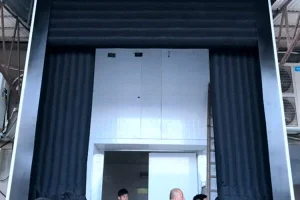
Why Loading Docks Are High-Risk Areas
Loading docks are constantly exposed to external environments. Every time a refrigerated truck arrives or departs, dock doors open and create a direct pathway for air exchange. This exposure can introduce dust, insects, humidity, and airborne contaminants into food handling areas.
In addition, temperature fluctuations during loading can accelerate bacterial growth or spoilage in perishable products if conditions are not tightly controlled.
Regulatory Expectations in Food Handling
Food safety regulations such as HACCP (Hazard Analysis and Critical Control Points) require businesses to identify and control risks at critical points in the supply chain. Loading docks are widely recognized as one of these critical control points due to their exposure to uncontrolled environments.
Failure to manage these risks can lead to non-compliance, product recalls, financial losses, and reputational damage.
What Are Inflatable Dock Seals?
Inflatable dock seals are advanced sealing systems installed around warehouse loading dock doors. They use air-filled chambers that expand when activated, creating a tight seal around the back and sides of a parked trailer.
How They Operate
When a truck backs into the dock, the inflatable system is activated either manually or automatically. Air is pumped into the sealed chambers, causing them to expand and press firmly against the trailer. This creates a near-airtight barrier that blocks external air, dust, and contaminants.
Once loading is complete, the air is released and the seals retract, allowing the truck to depart safely.
Adaptive Sealing Capability
Unlike fixed foam seals, inflatable dock seals adapt to different trailer sizes and positioning variations. This ensures a consistent seal even when trucks are not perfectly aligned with the dock, which is common in busy food distribution environments.
Reducing Contamination Risks at the Dock
One of the most important contributions of inflatable dock seals is their ability to reduce contamination risks during food handling operations.
Blocking Dust, Insects, and Airborne Particles
Open dock doors allow dust, debris, insects, and airborne particles to enter food handling areas. Inflatable dock seals create a physical barrier that significantly reduces these intrusions by sealing gaps around the trailer.
This helps maintain cleaner environments and reduces the likelihood of contamination incidents.
Limiting Human and Environmental Exposure
Loading docks often involve high levels of human activity, forklifts, and vehicle movement. These operations can stir up dust and increase contamination risks. By enclosing the dock area more effectively, inflatable seals help isolate internal environments from external disturbances.
Supporting Temperature Control for Food Safety Compliance
Temperature control is one of the most critical aspects of food safety. Inflatable dock seals help maintain stable conditions during loading and unloading operations.
Preventing Cold Chain Breaks
Perishable foods such as meat, dairy, seafood, and frozen products must remain within strict temperature ranges. Any exposure to warmer air during loading can compromise product integrity.
Inflatable dock seals reduce air exchange between the warehouse and external environment, helping maintain consistent temperatures and prevent cold chain breaks.
Reducing Temperature Fluctuations
Even short-term temperature fluctuations can affect food quality. Inflatable seals minimize the entry of warm air during dock operations, reducing the strain on refrigeration systems and maintaining stable internal conditions.
This stability is essential for compliance with food safety standards.
Enhancing Hygiene and Cleanliness Standards
Food safety compliance is closely linked to maintaining hygienic environments. Inflatable dock seals contribute significantly to cleanliness at the dock interface.
Reducing Moisture and Condensation
When warm air enters cold environments, condensation can form on surfaces and packaging. This moisture creates ideal conditions for microbial growth and can compromise food safety.
By minimizing air exchange, inflatable dock seals help reduce condensation and maintain drier, safer environments.
Supporting Clean Zone Separation
Many food facilities operate with designated clean zones to separate raw materials, finished products, and external environments. Inflatable dock seals reinforce this separation by creating a controlled barrier between outside conditions and internal processing areas.
Compliance with Food Safety Standards
Inflatable dock seals directly support compliance with several widely recognized food safety frameworks.
HACCP Compliance
HACCP systems require the identification and control of critical points where contamination risks may occur. Loading docks are typically classified as such points due to their exposure to external environments.
Inflatable dock seals help mitigate these risks by controlling airflow, temperature, and contamination entry at the dock.
Good Distribution Practice (GDP)
In food and pharmaceutical logistics, GDP guidelines emphasize maintaining product integrity throughout transportation and storage. Inflatable dock seals support these requirements by ensuring stable environmental conditions during loading operations.
Operational Benefits That Support Food Safety
Beyond regulatory compliance, inflatable dock seals offer operational advantages that reinforce food safety practices.
Improved Workflow Efficiency
Inflatable dock seals activate quickly and automatically adjust to trailers, reducing delays during loading and unloading. Faster operations reduce the time that dock doors remain open, lowering contamination risks.
Reduced Human Error
Manual sealing systems require worker intervention and adjustment, increasing the risk of improper sealing. Inflatable systems reduce reliance on manual processes, improving consistency and reliability.
Enhanced Visibility and Monitoring
Modern inflatable dock seal systems can be integrated with sensors and monitoring tools, allowing facilities to track performance and ensure consistent sealing effectiveness.
Energy Efficiency and Sustainability Benefits
Food safety and energy efficiency often go hand in hand in cold storage operations.
Lower Energy Consumption
By reducing air leakage, inflatable dock seals decrease the workload on refrigeration systems. This leads to lower energy consumption and reduced operational costs.
Supporting Sustainability Goals
Many food companies are adopting sustainability targets that include reducing energy use and carbon emissions. Inflatable dock seals contribute to these goals by improving thermal efficiency and reducing wasted energy.
Choosing the Right Inflatable Dock Seal System
Selecting the right system is essential for maximizing food safety benefits.
Facility Type and Product Sensitivity
Facilities handling highly sensitive products such as frozen foods or fresh produce should prioritize high-performance inflatable systems that offer maximum sealing capability.
Traffic Volume and Dock Usage
High-traffic facilities benefit most from durable, automated inflatable systems that can withstand frequent use without performance degradation.
Maintenance and Durability Considerations
Regular maintenance ensures long-term reliability. Inflatable dock seals are generally low-maintenance but should still be inspected regularly to ensure proper inflation and sealing performance.
Conclusion
Inflatable dock seals play a vital role in helping food facilities meet strict food safety standards. By reducing contamination risks, maintaining temperature stability, and improving hygiene at loading docks, they address some of the most critical challenges in cold chain logistics.
From supporting HACCP compliance to enhancing operational efficiency and sustainability, these systems provide both regulatory and practical benefits. For any facility involved in food storage, processing, or distribution, inflatable dock seals are not just an improvement—they are an essential part of a modern food safety strategy.
Recent Comments