
Cold Storage Design Trends to Watch in 2026
Cold storage facilities are becoming increasingly important as demand grows for fresh food, frozen products, pharmaceuticals, biotechnology products, and temperature-sensitive goods. At the same time, operators are facing pressure to reduce energy consumption, improve productivity, control operating costs, and meet increasingly demanding sustainability expectations.
These changes are influencing how new cold storage facilities are designed and how existing warehouses are upgraded. In 2026, cold storage design is increasingly focused on efficiency, automation, flexibility, data, and long-term operational performance.
Here are some of the key cold storage design trends to watch in 2026.
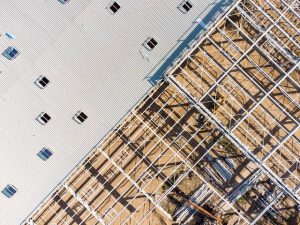
1. Greater Focus on Energy-Efficient Cold Storage Design
Energy efficiency continues to be one of the most important priorities in cold storage facility design. Refrigeration can represent a significant portion of a facility’s operating costs, particularly in frozen environments.
High-Performance Building Envelopes
Modern cold storage facilities are placing greater emphasis on insulated walls, ceilings, floors, doors, and carefully sealed building envelopes. Better insulation reduces unwanted heat transfer and allows refrigeration systems to operate more efficiently.
Designers are also paying closer attention to thermal bridges, joints, penetrations, and other areas where heat can enter a temperature-controlled environment.
Smarter Refrigeration Systems
Refrigeration systems are increasingly being designed around actual facility demand rather than simply operating at a constant output. Variable-speed components, advanced controls, efficient fans, and improved system monitoring can help match refrigeration capacity with changing operating conditions.
This approach can reduce unnecessary energy use while maintaining stable temperatures.
2. Automation and Robotics in Cold Storage
Automation is becoming an increasingly important part of cold storage facility design. Working in refrigerated and frozen environments can be physically demanding, while labor availability can be challenging for some operators.
Automated Storage and Retrieval
Automated storage and retrieval systems can help facilities make better use of vertical space while reducing the amount of manual product handling required.
These systems can be particularly valuable in high-density cold storage environments where maximizing storage capacity is a major priority.
Robotic Material Handling
Automated guided vehicles, autonomous mobile robots, robotic pallet handling systems, and automated picking technologies can improve product movement within temperature-controlled facilities.
However, automation needs to be considered during the initial building design. Floor specifications, clear heights, rack configurations, charging areas, equipment routes, and safety zones all need to support the selected technology.
3. Data-Driven Facility Design
Cold storage facilities are becoming more connected, allowing operators to collect and analyze larger amounts of operational data.
More Sensors and Monitoring
Temperature sensors, humidity sensors, energy meters, equipment monitoring systems, and other connected devices can provide continuous information about facility performance.
Instead of relying solely on periodic inspections, operators can use real-time information to identify temperature deviations, equipment issues, and unusual energy consumption.
Predictive Maintenance
Data can also support predictive maintenance strategies. Refrigeration equipment and other critical systems can be monitored for changes in operating performance that may indicate developing problems.
Identifying potential failures earlier can help reduce unexpected downtime and protect temperature-sensitive inventory.
4. Flexible and Multi-Temperature Facilities
Cold storage demand is becoming more diverse. A single facility may need to handle frozen goods, chilled products, fresh produce, pharmaceuticals, and other products with different temperature requirements.
Multiple Temperature Zones
Modern facilities are increasingly designed with separate temperature-controlled zones. This allows different products to be stored under appropriate conditions without unnecessarily cooling the entire building to the lowest required temperature.
Proper zoning can improve energy efficiency while providing greater operational flexibility.
Adaptable Storage Areas
Flexibility is also becoming important as product demand changes. Adjustable racking, modular refrigeration systems, movable partitions, and adaptable workflows can allow facilities to respond to changing inventory requirements.
Designing for flexibility can help reduce the need for major renovations as business requirements evolve.
5. Higher-Density Cold Storage
Land availability and property costs are encouraging businesses to look for ways to increase storage capacity without proportionally increasing their building footprint.
Making Better Use of Vertical Space
High-bay warehouses can use available vertical space more effectively than traditional low-rise storage facilities. Automated systems can make high-density storage more practical by handling pallets at greater heights.
However, high-density design requires careful consideration of structural loads, fire protection, refrigeration airflow, access, and maintenance requirements.
Optimized Warehouse Layouts
Facility layouts are increasingly being designed around product flow rather than storage capacity alone. Receiving, storage, picking, staging, and dispatch areas should work together to minimize unnecessary movement.
An efficient layout can improve productivity while reducing the time temperature-controlled doors need to remain open.
6. Sustainable Cold Storage Design
Sustainability is becoming a more significant consideration in cold storage development. Facility owners are increasingly looking at both energy consumption and the environmental impact of building and operating their warehouses.
Lower-Impact Refrigeration
Refrigeration system selection can have an important environmental impact. Designers are increasingly evaluating refrigerants and system configurations based on factors such as efficiency, safety, regulatory requirements, and environmental performance.
The appropriate solution depends on facility size, temperature requirements, local regulations, and other project-specific factors.
Renewable Energy Integration
Large cold storage facilities can have substantial electricity requirements, making them potential candidates for renewable energy strategies. Solar photovoltaic systems, battery storage, energy management systems, and other technologies may be incorporated where site conditions and project economics support them.
Sustainable design should consider the complete energy profile rather than treating renewable generation as a standalone feature.
7. Improved Cold Chain Visibility
Cold storage is only one part of a temperature-controlled supply chain. Maintaining product conditions during receiving, storage, picking, loading, and transportation requires greater visibility across each stage.
Integrated Temperature Monitoring
Connected monitoring systems can provide information about temperature conditions across different areas of a facility. Alerts can help operators respond quickly when conditions move outside established parameters.
This can be especially important for products where temperature excursions can affect quality or usability.
Digital Inventory Management
Warehouse management systems can connect inventory information with storage locations and operational processes. Integration with automated equipment and temperature monitoring can provide operators with a more complete view of facility performance.
Better visibility can also support inventory rotation, traceability, and more efficient product handling.
8. Better-Designed Loading and Staging Areas
Loading docks are another important area of cold storage design. Every time temperature-controlled space is exposed to warmer external conditions, refrigeration systems may need to compensate for additional heat and moisture infiltration.
Temperature-Controlled Dock Design
Modern facilities are increasingly considering dock design as part of the overall temperature-control strategy. Insulated doors, dock seals, rapid-opening doors, staging areas, and appropriately designed transitions can help limit unwanted air exchange.
Faster Product Transfer
Efficient loading and unloading processes can reduce the amount of time products spend outside their required temperature environment.
Facility layouts should therefore provide logical connections between storage zones, staging areas, docks, and transportation operations.
9. Designing for Resilience and Future Expansion
Cold storage facilities are long-term investments, so today’s design needs to account for tomorrow’s operational requirements.
Planning for Business Growth
Facilities can be designed with expansion areas, additional refrigeration capacity, adaptable electrical infrastructure, and flexible storage configurations where practical.
Planning for future growth can reduce the disruption and cost associated with major modifications later.
Building Greater Operational Resilience
Resilience can also involve backup power, redundant refrigeration capacity, equipment monitoring, emergency procedures, and robust maintenance access.
The appropriate level of redundancy depends on the products being stored and the consequences of a temperature-control failure.
Conclusion
Cold storage design in 2026 is increasingly focused on creating facilities that are efficient, automated, connected, flexible, and resilient. Energy-efficient refrigeration and high-performance building envelopes remain fundamental, while automation, real-time monitoring, high-density storage, sustainability, and adaptable layouts are shaping the next generation of temperature-controlled warehouses.
The most effective approach is to consider these trends as interconnected elements rather than isolated technologies. Automation affects layout. Layout affects airflow and product movement. Refrigeration affects energy consumption. Building design affects refrigeration demand. Data systems influence maintenance and operational decisions.
By considering these relationships during the planning stage, cold storage operators can create facilities that are better prepared for changing market requirements while maintaining reliable temperature control and efficient day-to-day operations.
Recent Comments