
Choosing the Right Loading Dock Solutions for Refrigerated Transport Facilities
Refrigerated transport facilities play an essential role in maintaining the quality and safety of temperature-sensitive products throughout the supply chain. From food and beverages to pharmaceuticals and other perishable goods, these facilities must maintain controlled temperatures while ensuring products can be transferred efficiently between warehouses and refrigerated vehicles.
One of the most important areas to consider when designing or upgrading a refrigerated transport facility is the loading dock. As the main connection point between the warehouse and transport vehicles, loading docks are exposed to frequent temperature changes, air infiltration and heavy operational activity.
Without suitable loading dock equipment, businesses may experience unnecessary energy losses, temperature fluctuations, product deterioration and operational delays. Choosing the right loading dock solutions can help address these challenges while improving productivity, workplace safety and overall cold chain efficiency.
In this article, we explore the key factors to consider when selecting loading dock solutions for refrigerated transport facilities and how the right equipment can support long-term operational performance.
Why Loading Dock Solutions Matter in Refrigerated Transport
Maintaining temperature consistency is essential for refrigerated transport operations. Every time a loading dock door opens, warm external air can enter the facility while refrigerated air escapes. This can place additional pressure on refrigeration systems and make it more difficult to maintain the required internal temperature.
The loading dock also needs to accommodate different vehicle sizes, loading equipment and frequent movements throughout the working day.
A well-designed loading dock system helps businesses manage these challenges by providing effective insulation, reducing air exchange and creating a safer environment for loading and unloading.
The right equipment can deliver several advantages:
Improved temperature control throughout loading operations.
Reduced energy consumption and refrigeration costs.
Faster and more efficient loading and unloading.
Better protection against external weather conditions.
Improved workplace safety and vehicle positioning.
Greater reliability across daily warehouse operations.
Selecting equipment that works together as an integrated system is particularly important for facilities operating under strict temperature requirements.
Essential Factors to Consider When Choosing Loading Dock Equipment
1. Temperature Control and Thermal Efficiency
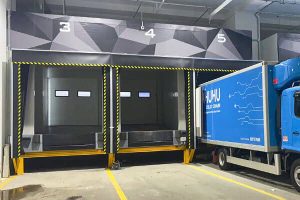
Temperature management should be one of the primary considerations when choosing loading dock solutions for refrigerated transport facilities.
Poorly insulated loading areas can allow warm air to enter the building, resulting in temperature fluctuations and increased refrigeration demand. This is particularly problematic in facilities handling frozen products or goods that require consistent temperature conditions.
Businesses should prioritise equipment designed to minimise heat transfer and reduce unwanted air exchange.
Insulated loading dock doors, dock seals and dock shelters can all contribute to better thermal performance. These systems help create barriers between the refrigerated warehouse and the external environment.
It is also important to consider how frequently loading dock doors are opened. Facilities with high vehicle movements may benefit from high-speed industrial doors that minimise the time a loading bay remains exposed.
2. Compatibility with Refrigerated Transport Vehicles
Not all refrigerated transport vehicles have the same dimensions or configurations. Trucks and trailers can vary in height, width and rear door design, which can affect how effectively they connect with a loading dock.
Choosing equipment that accommodates the facility’s vehicle fleet is essential for maintaining efficient operations.
Dock shelters and dock seals should be selected according to the range of vehicles using the facility. Similarly, dock levellers must provide sufficient adjustment to accommodate differences in truck bed heights.
Businesses should assess their current vehicle requirements and consider potential changes to their transport fleet when planning loading dock upgrades.
This helps ensure the equipment remains practical and effective as operational requirements evolve.
3. Loading Frequency and Operational Capacity
The volume of daily loading and unloading activity can significantly influence the type of loading dock equipment required.
Facilities handling a small number of deliveries may have different requirements from large refrigerated distribution centres operating around the clock.
High-volume facilities generally benefit from durable equipment designed for frequent operation. High-speed doors, automated dock systems and hydraulic dock levellers can help improve loading efficiency while reducing unnecessary waiting times.
It is also worth considering how many loading bays are required to accommodate peak transport periods.
A properly designed loading dock layout can help prevent vehicle congestion, improve workflow and ensure refrigerated products move efficiently between storage and transport.
Key Loading Dock Solutions for Refrigerated Transport Facilities
Insulated Loading Dock Doors
Insulated loading dock doors are an important component of temperature-controlled warehouse infrastructure.
These doors help minimise heat transfer between internal refrigerated spaces and external environments. By improving thermal separation, they can reduce the workload placed on refrigeration systems.
When selecting insulated doors, businesses should consider insulation performance, durability, opening speed and compatibility with existing warehouse systems.
For facilities with frequent vehicle movements, combining insulated doors with automated opening mechanisms can help improve operational efficiency.
Dock Shelters and Dock Seals
Dock shelters and dock seals help close the gaps between the loading dock opening and the rear of a transport vehicle.
These gaps can allow warm air, dust, moisture and external weather conditions to enter the loading area. In refrigerated facilities, this can compromise temperature control and increase refrigeration costs.
Dock shelters create a flexible enclosure around the vehicle, while dock seals use compression to minimise gaps between the truck and the building.
The right option depends on vehicle dimensions, loading frequency, dock configuration and temperature requirements.
For refrigerated transport facilities, effective sealing is particularly valuable because it helps maintain a more controlled environment during loading and unloading.
Hydraulic Dock Levellers
Dock levellers provide a safe and practical transition between the loading dock platform and the transport vehicle.
Hydraulic dock levellers are commonly used in industrial facilities because they can accommodate differences in vehicle bed heights and support the movement of forklifts and pallet trucks.
They help streamline loading operations by reducing the need for manual adjustments and allowing goods to move more efficiently.
When selecting a dock leveller, businesses should consider load capacity, operating frequency, platform dimensions and maintenance requirements.
Equipment should also be suitable for the environmental conditions within the facility, particularly where moisture and low temperatures may affect performance.
High-Speed Industrial Doors
High-speed industrial doors are designed to open and close rapidly, helping minimise the time loading dock areas remain exposed to external temperatures.
This makes them particularly useful for refrigerated facilities where vehicles and warehouse personnel move through doorways frequently.
Reducing door opening times can help limit unnecessary air exchange and support more consistent internal temperatures.
Depending on the application, high-speed doors can also be integrated with motion sensors, automated controls and vehicle detection systems.
These features help improve traffic flow while reducing the need for manual door operation.
Vehicle Restraint Systems and Dock Bumpers
Workplace safety is another important consideration when choosing loading dock equipment.
Dock bumpers help protect the building structure and transport vehicles from impact when trucks reverse into loading bays.
Vehicle restraint systems provide additional protection by securing vehicles in position during loading and unloading activities.
These systems help reduce the risk of unexpected vehicle movement, which can create dangerous gaps between the truck and loading platform.
Combining appropriate vehicle restraints, dock bumpers and safe operating procedures can help create a more controlled loading environment.
Balancing Energy Efficiency, Safety and Productivity
The most effective loading dock solutions are those that support multiple operational requirements rather than focusing on individual equipment upgrades.
Reducing Energy Consumption
Refrigeration systems require significant energy to maintain controlled temperatures. When warm air enters through poorly sealed loading areas, cooling systems must work harder to restore the required conditions.
Insulated doors, dock seals and high-speed door systems can help reduce unnecessary air exchange.
Although the actual energy savings depend on facility design, usage patterns and refrigeration performance, improving loading dock insulation and sealing can contribute to better overall energy efficiency.
Improving Loading and Unloading Productivity
Efficient loading dock equipment helps reduce delays and supports smoother warehouse operations.
Hydraulic dock levellers provide convenient access between trucks and warehouse floors, while high-speed doors help maintain traffic flow.
Dock shelters and seals also help create a more controlled loading environment, allowing employees to transfer goods without unnecessary exposure to external conditions.
These improvements can help businesses manage higher delivery volumes and maintain reliable transport schedules.
Supporting Workplace Safety
Cold storage facilities can present additional hazards, including condensation, slippery surfaces, frost and ice accumulation.
Choosing suitable loading dock equipment can help reduce some of these risks. However, equipment selection should be supported by regular inspections, maintenance and appropriate staff training.
Businesses should also consider lighting, pedestrian access, vehicle movement procedures and emergency controls when designing loading dock areas.
Why Professional Loading Dock Assessment Is Important
Before investing in new equipment, businesses should assess their existing loading dock infrastructure and identify areas where improvements are needed.
A professional assessment can help determine whether current equipment provides sufficient thermal protection, operational capacity and safety performance.
Important considerations include warehouse layout, refrigeration requirements, vehicle dimensions, loading frequency and existing equipment compatibility.
Working with an experienced loading dock solutions provider can also help businesses select equipment that integrates effectively with their facility.
Rather than choosing individual products without considering the overall system, businesses should look for solutions that support the complete loading and unloading process.
Conclusion: Invest in the Right Loading Dock Solutions for Refrigerated Transport
Choosing the right loading dock solutions is essential for maintaining efficient and reliable refrigerated transport operations. From temperature control and energy efficiency to productivity and workplace safety, loading dock equipment plays a significant role in overall facility performance.
Insulated loading dock doors, dock shelters, dock seals, hydraulic dock levellers, high-speed industrial doors and vehicle restraint systems all contribute to creating a more controlled and efficient loading environment.
By assessing operational requirements and investing in suitable equipment, refrigerated transport facilities can minimise temperature fluctuations, improve workflow and support the protection of temperature-sensitive products.
Ultimately, a well-designed loading dock system is an important investment in long-term cold chain performance. Selecting the right solutions today can help businesses create more efficient, reliable and sustainable refrigerated transport operations for the future.
Explore more: dock seals and loading docks
- Understanding Inflatable Dock Seals
- Dock Shelters vs. Dock Seals: Which Is Best for Cold Storage Facilities?
- How do you measure for loading dock seals?
- What are dock seals made of?
- How Inflatable Dock Seals Reduce Energy Costs Year-Round
- How Inflatable Dock Seals Help Meet Food Safety Standards
- Best Dock Sealing Solutions for Refrigerated Warehouses
- Why Cold Storage Facilities Need Inflatable Dock Seals
Planning a project? See our Tretight Inflatable Dock Seals page, or contact Commercial & General Coolrooms for advice and a quote.
Recent Comments