
How Sectional Lift Doors Help Reduce Energy Loss in Cold Storage Rooms
Cold storage rooms play an essential role in industries such as food processing, hospitality, pharmaceuticals, logistics and warehousing. Maintaining consistent temperatures is critical for protecting perishable goods, preserving product quality and meeting industry storage requirements. However, keeping these environments cold requires significant energy consumption, particularly when refrigerated spaces experience frequent temperature fluctuations.
One often overlooked factor contributing to energy loss is the type of door installed in a cold storage facility. Every time a cold storage room is accessed, warm air can enter while refrigerated air escapes, placing additional pressure on refrigeration systems. Over time, this can increase electricity costs, reduce operational efficiency and affect temperature stability.
Installing high-quality sectional lift doors, available in both electric and manual operating options, can help minimise these energy losses. Their insulated construction, effective sealing systems and practical opening mechanisms make them a valuable solution for temperature-controlled environments.
In this article, we explore how sectional lift doors help reduce energy loss in cold storage rooms and why choosing the right door system can improve overall facility efficiency.
1. Understanding Energy Loss in Cold Storage Rooms
Cold storage facilities rely on refrigeration systems to maintain specific internal temperatures. These systems continuously remove heat that enters the room through walls, ceilings, floors and access points.
Doors are particularly important because they create a direct opening between the controlled internal environment and the surrounding space.
How Traditional Doors Contribute to Energy Loss
When a cold storage door is opened, warm external air can enter the refrigerated environment. At the same time, cold air escapes, creating an imbalance that the refrigeration system must correct.
This process can happen several times throughout the working day, particularly in busy warehouses and food distribution facilities.
Common causes of energy loss include:
Poor insulation that allows heat to transfer through door panels.
Gaps around door edges that allow warm air infiltration.
Frequent or unnecessarily long door opening periods.
Worn seals that no longer provide an effective barrier.
Poorly maintained door mechanisms that affect closing performance.
Reducing these issues is an important step towards improving cold storage energy efficiency.
2. Insulated Panels Help Maintain Internal Temperatures
One of the main advantages of sectional lift doors is their insulated panel construction. Unlike basic doors with little thermal resistance, insulated sectional doors are designed to help reduce heat transfer between different temperature environments.
Reducing Heat Transfer Through Door Panels
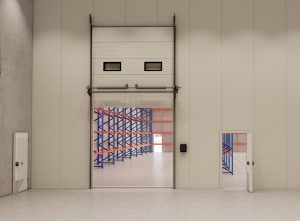
Quality insulated sectional lift doors commonly feature sandwich panel construction, incorporating insulating materials between internal and external surfaces.
This construction helps slow the movement of heat from warmer surrounding areas into the cold storage room.
By reducing heat transfer through the door itself, the refrigeration system has less additional heat to remove. This can contribute to more stable internal temperatures and improved energy performance.
Supporting Consistent Cold Storage Conditions
Temperature consistency is particularly important for businesses storing fresh produce, frozen food and other temperature-sensitive products.
Insulated sectional lift doors help maintain a more controlled environment by providing an additional thermal barrier at one of the facility’s main access points.
For businesses operating refrigerated warehouses or temperature-controlled distribution centres, this can support both product protection and operational efficiency.
3. Effective Sealing Helps Prevent Cold Air Leakage
Insulation is only one part of an energy-efficient door system. Even a well-insulated door can contribute to energy loss if there are gaps around its edges.
Sectional lift doors can incorporate sealing systems designed to minimise unwanted air movement when the door is fully closed.
Perimeter Seals for Better Temperature Control
Perimeter seals are fitted around the door opening to help close gaps between the door and the surrounding structure.
Depending on the door design, these seals may be installed along the sides, top and bottom of the opening.
When properly fitted and maintained, they help reduce the movement of warm air into the cold storage room and prevent refrigerated air from escaping.
Maintaining an Effective Bottom Seal
The bottom edge of a cold storage door is another important area to consider. Uneven floors, damaged seals and installation issues can create small openings that allow air leakage.
A suitable bottom sealing system helps improve contact between the door and floor when closed.
Regular inspections are important to ensure seals remain flexible, correctly positioned and free from damage.
4. Electric Sectional Lift Doors Can Reduce Unnecessary Opening Times
Electric sectional lift doors offer operational advantages for cold storage facilities where doors are accessed frequently throughout the day.
Unlike manually operated systems, electric doors use a motorised mechanism to open and close the door with minimal physical effort.
Faster and More Convenient Door Operation
In busy warehouse environments, employees may need to move products using forklifts, pallet jacks and other material-handling equipment.
Electric sectional lift doors allow authorised personnel to operate the door using suitable controls, reducing the effort and time involved in accessing the cold storage area.
When correctly configured, automatic closing functions can also help prevent doors from being left open longer than necessary.
Reducing unnecessary opening periods helps limit the exchange of warm and cold air, supporting better temperature management.
Improving Workflow in High-Traffic Facilities
Electric operation can make a difference in facilities with frequent deliveries, dispatches and stock movements.
Convenient operation helps employees move products through access points more efficiently while reducing the likelihood of doors remaining open due to manual handling difficulties.
However, opening speed, closing controls and safety features should be selected according to the facility’s traffic levels and operational requirements.
5. Manual Sectional Lift Doors Provide a Practical Alternative
Although electric sectional lift doors offer convenience and automation, manual sectional lift doors can also be suitable for certain cold storage applications.
Facilities with smaller access points or less frequent door usage may benefit from a manual operating system.
Lower Dependence on Electrical Components
Manual sectional lift doors do not require a powered motor to operate. This can make them a practical option for businesses looking for a simpler door system.
However, manual operation does not automatically mean better energy efficiency. The door’s insulation, sealing quality and ability to close securely remain the most important factors in reducing heat transfer.
Choosing the Right Operating System
When deciding between electric and manual sectional lift doors, businesses should consider:
How frequently the cold storage room is accessed.
The size and weight of the door.
Available space around the opening.
Employee workflow and handling requirements.
Maintenance and operating costs.
Required safety and access-control features.
The most suitable option is one that supports efficient daily operations while maintaining effective temperature separation.
6. Sectional Lift Doors Help Reduce Refrigeration System Workload
Refrigeration systems are designed to maintain specific temperatures by removing heat from enclosed spaces. When excessive warm air enters a cold storage room, the refrigeration equipment must work harder to restore the required conditions.
This can increase energy consumption and place additional demand on refrigeration components.
Reducing the Amount of Heat Entering the Facility
By combining insulated panels with effective perimeter sealing, sectional lift doors help limit the amount of heat entering through door openings when closed.
This can reduce the additional cooling demand associated with heat transfer and air leakage.
Supporting Long-Term Operational Efficiency
Reducing unnecessary refrigeration demand can contribute to improved operating efficiency over time.
Although the actual energy savings depend on factors such as door dimensions, usage frequency, insulation performance and facility design, selecting an appropriate sectional lift door can be a worthwhile investment in overall cold storage performance.
7. Regular Maintenance Is Essential for Energy Efficiency
Even a high-quality sectional lift door needs regular maintenance to maintain its performance. Over time, moving components can wear down, seals can deteriorate and mechanical adjustments may become necessary.
A poorly maintained door may not close correctly, creating gaps that allow unwanted air movement.
Inspecting Door Seals and Insulation
Regularly inspect the door’s perimeter seals, bottom seal and insulated panels for signs of damage.
Look for:
Cracked, loose or worn rubber seals.
Damaged or dented insulated panels.
Gaps between the door and frame.
Visible signs of condensation or moisture around the opening.
Doors that do not close evenly.
Addressing these problems early can help maintain the door’s thermal performance.
Checking Operating Mechanisms
Electric and manual sectional lift doors both rely on mechanical components to operate correctly.
Tracks, rollers, hinges, springs and other moving parts should be inspected and maintained according to manufacturer recommendations.
For electric systems, motors, control units and safety devices should also be checked by qualified technicians.
Routine maintenance helps ensure the door operates smoothly, closes securely and continues to provide effective protection against energy loss.
8. Choosing the Right Sectional Lift Door for Your Cold Storage Facility
Not all sectional lift doors are designed for the same operating conditions. When selecting a door for a cold storage room, businesses should consider the facility’s temperature requirements, access frequency and environmental conditions.
Important considerations include:
Insulation performance: Select door panels with suitable thermal insulation properties for the intended application.
Sealing quality: Look for reliable perimeter and bottom sealing systems.
Operating method: Determine whether an electric or manual system better suits daily operations.
Door dimensions: Ensure the door is appropriately sized for personnel, forklifts and product movement.
Durability: Choose materials and components suitable for demanding commercial and industrial environments.
Maintenance requirements: Consider long-term servicing needs and the availability of replacement components.
Professional installation is equally important. Correct alignment, appropriate sealing and proper adjustment all contribute to the overall performance of the door.
Conclusion: Improve Cold Storage Energy Efficiency with Sectional Lift Doors
Reducing energy loss is an important consideration for any business operating cold storage rooms. Poor insulation, air leakage and frequent door openings can all increase refrigeration demand and contribute to higher electricity costs.
Sectional lift doors provide a practical solution by combining insulated panel construction, effective sealing systems and convenient operating options. Whether choosing an electric or manual model, businesses can benefit from a door system designed to support temperature stability and efficient daily operations.
Electric sectional lift doors may be particularly beneficial in high-traffic facilities where convenient and controlled access is essential, while manual models can provide a practical alternative for less frequently accessed areas.
Ultimately, selecting the right sectional lift door and maintaining it correctly can help reduce unnecessary energy loss, protect stored products and support the long-term efficiency of cold storage operations.
Recent Comments