
Improving Cold Storage Energy Efficiency with Insulated Sectional Lift Doors
Energy efficiency is a major consideration for businesses operating cold storage rooms, refrigerated warehouses and temperature-controlled facilities. Maintaining consistent internal temperatures requires refrigeration systems to operate continuously, which can result in significant electricity consumption. For businesses looking to reduce operating costs while maintaining reliable storage conditions, improving insulation and minimising unwanted heat transfer are essential.
One important factor that can influence cold storage energy efficiency is the type of door installed. Doors are frequently opened during deliveries, stock transfers and daily warehouse operations, allowing warm air to enter and refrigerated air to escape. Without suitable insulation and effective sealing, these openings can contribute to unnecessary energy loss.
Insulated sectional lift doors provide a practical solution for managing heat transfer and maintaining controlled environments. Available in electric and manual operating options, these doors combine insulated panel construction with space-saving functionality and reliable access.
In this article, we explore how insulated sectional lift doors can improve cold storage energy efficiency, reduce refrigeration demand and support more efficient warehouse operations.
1. Why Energy Efficiency Matters in Cold Storage Facilities
Cold storage facilities are designed to maintain specific temperature ranges to protect products from spoilage, deterioration and temperature-related damage. Industries such as food processing, pharmaceuticals, hospitality and logistics depend on reliable refrigeration to preserve product quality.
However, maintaining low temperatures requires substantial energy. Refrigeration systems must continuously remove heat entering the storage environment through walls, ceilings, floors and access points.
The Impact of Heat Transfer
Heat naturally moves from warmer environments towards colder environments. In a cold storage room, this means heat from surrounding areas can enter through poorly insulated building materials and door openings.
When additional heat enters the room, refrigeration equipment must work harder to maintain the required temperature.
This can contribute to:
Increased electricity consumption.
Higher refrigeration operating costs.
Greater demand on cooling equipment.
Temperature fluctuations that affect stored products.
Increased wear on refrigeration components.
Improving insulation throughout the facility, including the door system, can help reduce these challenges.
2. How Insulated Sectional Lift Doors Improve Thermal Performance
Insulated sectional lift doors are designed to provide an additional barrier between refrigerated spaces and surrounding environments. Their construction helps reduce heat transfer while allowing convenient access for warehouse personnel and equipment.
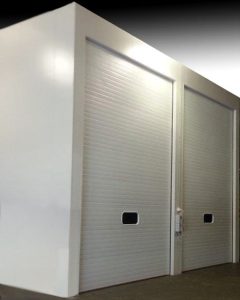
Unlike basic industrial doors, insulated sectional doors typically feature multiple panels containing insulating materials.
Insulated Sandwich Panel Construction
Many sectional lift doors use a sandwich panel design consisting of an internal insulating core enclosed between external panel surfaces.
The insulating core helps slow the movement of heat through the door, reducing the amount of thermal energy entering the cold storage environment.
The actual insulation performance depends on the panel material, thickness, construction quality and overall door design.
For businesses operating temperature-controlled facilities, selecting a door with suitable thermal performance is an important part of maintaining energy efficiency.
Maintaining Consistent Internal Temperatures
When a door provides effective insulation, it helps reduce temperature differences between the cold storage room and surrounding areas.
This supports more consistent internal conditions and can reduce the additional cooling demand associated with heat transfer through the door panels.
Stable temperatures are particularly important for businesses storing frozen food, fresh produce, pharmaceutical products and other temperature-sensitive goods.
3. Effective Sealing Helps Prevent Unwanted Air Infiltration
Insulation alone is not enough to create an energy-efficient cold storage door. Even well-insulated panels can lose their effectiveness if gaps exist around the door opening.
Warm air infiltration and cold air leakage can contribute significantly to refrigeration demand, particularly in facilities where doors are accessed frequently.
Perimeter Seals for Improved Air Control
Insulated sectional lift doors can incorporate sealing systems around the sides and top of the door opening.
These seals help minimise gaps between the door and its surrounding frame when the door is fully closed.
A properly fitted sealing system reduces unwanted air movement and helps maintain the separation between refrigerated and ambient environments.
Bottom Seals and Floor Contact
The bottom edge of a sectional lift door is another important area where air leakage can occur.
Uneven floors, damaged seals or incorrect door adjustments can create openings that allow warm air to enter the cold storage room.
A suitable bottom seal helps close this gap when the door is lowered.
Regular inspections are recommended to ensure the seal remains in good condition and maintains appropriate contact with the floor.
4. Electric Sectional Lift Doors Support More Efficient Operations
For cold storage facilities with frequent deliveries and product movements, electric sectional lift doors can provide operational advantages.
These doors use motorised systems to open and close the door, reducing the physical effort required from employees and making access more convenient.
Reducing the Time Doors Remain Open
Every time a cold storage door remains open, there is an opportunity for warm air to enter and refrigerated air to escape.
Electric sectional lift doors can be configured with suitable operating controls and automatic closing functions to help minimise unnecessary opening periods.
This can be particularly beneficial in busy distribution centres where employees regularly move products between refrigerated storage areas and loading zones.
Improving Warehouse Workflow
Motorised operation allows employees to operate larger or heavier doors more conveniently.
Depending on the selected control system, doors can be operated using wall-mounted controls, remote controls or other compatible access systems.
Improved access can help streamline daily warehouse activities while supporting better management of temperature-controlled environments.
5. Manual Insulated Sectional Lift Doors Are Also an Option
While electric sectional lift doors are suitable for many high-traffic facilities, manual insulated sectional lift doors can be a practical alternative for smaller cold storage rooms or areas with less frequent access.
The most important consideration is not whether the door is electric or manual, but whether its insulation, sealing and closing performance meet the requirements of the facility.
When Manual Operation Makes Sense
Manual sectional lift doors may be appropriate where:
The door is accessed less frequently.
The opening size and door weight allow practical manual operation.
A simpler operating system is preferred.
Electrical infrastructure is limited.
Operating requirements do not justify motorised controls.
These doors can still provide effective thermal performance when manufactured with suitable insulated panels and properly installed sealing systems.
Comparing Electric and Manual Options
Electric doors generally offer greater convenience for high-frequency applications, while manual doors can provide a simpler solution for lower-traffic areas.
Businesses should consider their daily operating requirements, door dimensions, employee workflow and long-term maintenance needs before choosing a system.
6. Reducing Refrigeration Costs Through Better Door Insulation
Refrigeration systems consume energy to remove heat from enclosed environments. When excessive heat enters a cold storage room, the cooling system must compensate to maintain the required temperature.
An appropriately insulated sectional lift door can help reduce one source of this additional thermal load.
Reducing the Cooling Demand
By slowing heat transfer through the door panels and limiting air leakage when closed, insulated sectional lift doors help reduce the amount of additional heat entering the refrigerated space.
This can contribute to a lower refrigeration workload, depending on the overall facility design and operating conditions.
Supporting Long-Term Energy Savings
The potential energy savings from upgrading a door system depend on several factors, including:
Existing door insulation performance.
Frequency and duration of door openings.
Internal and external temperature differences.
Quality of the door seals.
Refrigeration system efficiency.
Size and number of access points.
Businesses should consider these factors when assessing the potential return on investment of an insulated sectional lift door installation.
7. The Importance of Proper Installation and Maintenance
Even the most advanced insulated sectional lift door may not deliver its intended thermal performance if it is incorrectly installed or poorly maintained.
Correct installation ensures that the door fits the opening, operates smoothly and provides effective contact with the surrounding sealing surfaces.
Professional Installation and Door Alignment
During installation, important considerations include panel alignment, track positioning, door balance and perimeter sealing.
Incorrect alignment can create gaps that allow air infiltration, reducing the effectiveness of the insulation system.
Professional installation helps ensure that the door is adjusted to operate correctly and provides reliable closing performance.
Regular Maintenance and Inspections
Routine maintenance helps preserve insulation and sealing performance over the life of the door.
Businesses should regularly inspect:
Insulated panels for dents, cracks or other damage.
Side and top seals for wear or deterioration.
Bottom seals for damage and poor floor contact.
Tracks, hinges and rollers for correct operation.
Springs and other mechanical components.
Electric motors and safety systems where applicable.
Damaged components should be repaired or replaced as recommended by the manufacturer.
8. Choosing the Right Insulated Sectional Lift Door for Your Facility
Selecting the right door requires an understanding of the facility’s temperature requirements, traffic levels and available installation space.
Not every sectional lift door is suitable for every cold storage application.
Important Factors to Consider
Before purchasing an insulated sectional lift door, consider the following:
Insulation specifications: Check the thermal performance of the door panels and ensure they are suitable for the intended temperature environment.
Sealing performance: Look for effective perimeter and bottom sealing systems that help reduce unwanted air movement.
Operating method: Determine whether electric or manual operation is more appropriate for daily warehouse activities.
Door dimensions: Select a suitable opening size for forklifts, pallet equipment, employees and product movements.
Durability: Consider the quality of the panels, tracks, operating components and protective finishes.
Maintenance support: Choose a door system with accessible servicing and replacement components.
Working with an experienced industrial door supplier can help businesses identify a suitable solution for their specific cold storage requirements.
Conclusion: Invest in Insulated Sectional Lift Doors for Better Cold Storage Efficiency
Improving energy efficiency in cold storage facilities requires attention to every part of the building’s thermal envelope. While refrigeration equipment plays a major role in maintaining low temperatures, the performance of doors can also influence overall energy consumption.
Insulated sectional lift doors help address heat transfer through door panels while effective sealing systems minimise unwanted air movement. Their practical design and availability in electric and manual configurations make them suitable for a range of commercial and industrial cold storage applications.
Whether you operate a refrigerated warehouse, food processing facility or temperature-controlled distribution centre, investing in the right insulated sectional lift door can help support temperature stability, reduce unnecessary refrigeration demand and improve daily operational efficiency.
Combined with professional installation and regular maintenance, a quality sectional lift door system is a valuable component of an energy-efficient cold storage facility.
Recent Comments