
Materials Behind Cold Room Efficiency
Cold rooms are essential in industries that depend on precise temperature control, such as food storage, pharmaceuticals, logistics, and chemical processing. While refrigeration systems often receive the most attention, the real driver of efficiency is the materials used in the cold room’s construction—especially in walls, floors, ceilings, and doors.
The right materials reduce heat transfer, improve energy efficiency, maintain stable internal temperatures, and extend equipment lifespan. Poor material selection, on the other hand, leads to energy loss, temperature fluctuations, and increased operational costs.
This article explores the key materials behind cold room efficiency and explains how each contributes to performance, durability, and sustainability.
Why Materials Matter in Cold Room Efficiency
Cold rooms operate in a constant battle against heat infiltration. Every material used in their construction plays a role in controlling this process.
Reducing Thermal Transfer
Heat naturally moves from warmer areas to cooler areas. Materials with strong insulation properties slow this movement, keeping internal temperatures stable. This reduces strain on refrigeration systems and improves efficiency.
Lowering Energy Consumption
Efficient materials reduce the amount of energy required to maintain cold temperatures. Over time, this leads to significant savings in electricity and reduces the environmental footprint of the facility.
Improving System Longevity
When cold rooms are well insulated, refrigeration systems cycle less frequently. This reduces wear and tear on compressors and other mechanical components, extending system lifespan.
Core Insulation Materials Driving Efficiency
The insulation core is the most important factor in cold room efficiency. It determines how well the structure resists heat flow.
Polyurethane Foam (PU)
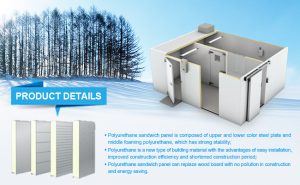
Polyurethane foam is one of the most widely used insulation materials in cold room construction. It is created by mixing chemical components that expand into a rigid foam with a closed-cell structure.
This structure traps gas bubbles that significantly reduce heat transfer. PU foam is highly efficient, lightweight, and provides excellent thermal resistance, making it ideal for both chillers and freezers.
Polyisocyanurate (PIR)
Polyisocyanurate foam is an advanced version of polyurethane with improved fire resistance and slightly higher thermal efficiency. It is commonly used in high-performance cold rooms where strict safety and energy standards apply.
PIR maintains stability even in extreme temperature environments, making it a preferred choice for industrial-scale cold storage facilities.
Expanded and Extruded Polystyrene (EPS and XPS)
EPS and XPS are cost-effective insulation materials used in less demanding cold room environments.
EPS is lightweight and affordable but has lower thermal resistance. XPS is denser, stronger, and more resistant to moisture, making it more efficient in environments with higher humidity or moderate cooling requirements.
Structural Materials That Support Efficiency
While insulation is the core of efficiency, structural materials play a supporting role in maintaining performance and durability.
Stainless Steel Panels
Stainless steel is widely used in cold room construction due to its durability, corrosion resistance, and hygiene benefits. It provides a smooth, non-porous surface that is easy to clean and resistant to bacterial growth.
Although it is more expensive than other materials, its longevity and performance make it ideal for food and pharmaceutical applications.
Galvanized Steel with Protective Coating
Galvanized steel is coated with a layer of zinc to prevent corrosion and is often finished with powder coating for added durability. It offers a cost-effective alternative to stainless steel while still providing strong structural integrity.
It is commonly used in commercial cold rooms and industrial storage facilities.
Aluminum Components
Aluminum is lightweight, corrosion-resistant, and easy to fabricate. It is often used in door frames and structural components where weight reduction is important.
However, aluminum must be combined with proper insulation to prevent heat bridging and maintain efficiency.
Sealing Materials That Enhance Performance
Even the best insulation materials cannot perform effectively without proper sealing systems. Air leakage is one of the biggest causes of energy loss in cold rooms.
Rubber Gaskets
Rubber gaskets are installed around doors and access points to create airtight seals. They compress when the door is closed, preventing warm air from entering and cold air from escaping.
High-quality gaskets remain flexible even in freezing conditions, ensuring long-term performance.
Magnetic Seals
Magnetic sealing systems are used in modern cold room doors to improve airtight performance. They apply consistent pressure along the sealing edges, reducing gaps and improving energy efficiency.
These systems are particularly useful in high-traffic environments where doors open frequently.
Silicone-Based Sealing Materials
Silicone seals are sometimes used in specialized applications due to their flexibility and resistance to extreme temperatures. They provide long-lasting sealing performance and resist cracking or hardening over time.
Floor and Wall Materials Impacting Efficiency
Cold room efficiency is not limited to doors and panels. Floors and walls also play a major role in thermal performance.
Insulated Sandwich Panels
Cold room walls are typically made using sandwich panels that combine metal sheets with an insulated core. These panels are designed to provide high thermal resistance while maintaining structural strength.
They are modular, making installation faster and more efficient.
Insulated Flooring Systems
Floors in cold rooms must also be insulated to prevent heat transfer from the ground. Materials such as high-density foam and vapor barriers are used to maintain thermal stability and prevent frost heave in freezer environments.
Vapor Barriers
Vapor barriers prevent moisture from entering insulation layers, which can reduce efficiency and cause structural damage. These barriers are essential in maintaining long-term performance.
Advanced Materials Improving Cold Room Efficiency
Modern cold room design increasingly incorporates advanced materials to enhance performance.
Thermal Break Materials
Thermal breaks are inserted between conductive materials like metal frames to prevent heat transfer. They significantly reduce energy loss caused by thermal bridging.
High-Density Structural Foams
High-density foams improve structural rigidity while maintaining insulation performance. They help prevent deformation and ensure long-term stability.
Anti-Frost Coatings
Anti-frost coatings reduce ice buildup on surfaces, improving airflow and maintaining consistent insulation performance in freezer environments.
How Material Combination Affects Overall Efficiency
Cold room efficiency depends not on a single material but on how different materials work together as a system.
Balanced Insulation and Structure
The best-performing cold rooms combine high-performance insulation like PU or PIR with durable structural materials such as stainless steel. This balance ensures both thermal efficiency and physical durability.
Airtight Integration of Components
Every joint, seal, and panel connection must be carefully designed to prevent air leakage. Even small gaps can significantly reduce efficiency.
Proper Installation and Maintenance
Even high-quality materials can underperform if installation is poor. Proper assembly and regular maintenance are essential for maintaining efficiency over time.
Conclusion
The efficiency of a cold room depends heavily on the materials used in its construction. From high-performance insulation cores like polyurethane and PIR to structural metals, sealing systems, and vapor barriers, every material plays a critical role in maintaining stable temperatures and reducing energy consumption.
Understanding the materials behind cold room efficiency helps explain why modern cold storage systems are so effective. When properly selected and combined, these materials create environments that are energy-efficient, durable, and reliable for long-term industrial use.
Recent Comments