
Solving Condensation Issues with Plastic Strip Curtains
Condensation is one of the most common and frustrating problems in cold storage environments, warehouses, food processing facilities, and refrigerated workspaces. When warm, moist air comes into contact with cold surfaces, water droplets form. Over time, this can lead to slippery floors, reduced visibility, hygiene concerns, and even equipment damage.
Plastic strip curtains are widely used to separate temperature zones and reduce air exchange, but if not properly selected, installed, or maintained, they can still contribute to condensation problems instead of preventing them. The good news is that with the right strategies, condensation issues can be significantly reduced or even eliminated.
This guide explains the causes of condensation and provides practical solutions for using plastic strip curtains effectively in cold environments.
Understanding Why Condensation Forms in Cold Storage Areas
Before solving the problem, it is important to understand how and why condensation occurs.
The Science Behind Condensation
Condensation happens when warm air containing moisture comes into contact with a cold surface. The air cools rapidly, and its ability to hold moisture decreases, causing water droplets to form.
In cold storage environments, this commonly occurs when:
Doors are opened frequently
Warm air enters from external environments
Humidity levels are high
Temperature differences between zones are large
Why It Is a Problem in Industrial Settings
Excess condensation can lead to:
Slippery and unsafe floors
Frost buildup on surfaces
Reduced visibility through curtains
Mold and bacterial growth
Equipment corrosion
Product contamination risks
Controlling condensation is essential for both safety and operational efficiency.
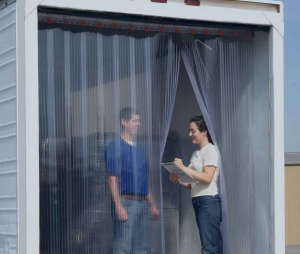
How Plastic Strip Curtains Help Control Condensation
Plastic strip curtains are designed to reduce air exchange between environments, making them a key tool in condensation control.
Barrier Against Warm Air Infiltration
PVC strip curtains reduce the amount of warm, moist air entering cold storage areas. By limiting air exchange, they help stabilize temperature and humidity levels.
Maintaining Thermal Separation
Properly installed strip curtains:
Maintain a consistent temperature gradient
Reduce rapid cooling of incoming air
Minimize moisture condensation on surfaces
However, their effectiveness depends heavily on correct installation and maintenance.
Choosing the Right PVC Strip Curtains for Condensation Control
Not all strip curtains perform equally in humid or cold environments.
Selecting the Correct Material Type
Different PVC types are suited for different conditions:
Standard PVC: Suitable for mild environments
Low-temperature PVC: Designed for freezer conditions
Anti-static or anti-fog PVC: Helps reduce moisture buildup and fogging
Using the wrong type of material is one of the main causes of persistent condensation problems.
Thickness and Flexibility Considerations
Thicker strips improve insulation but may reduce airflow flexibility
Thinner strips allow easier movement but may be less effective in extreme cold
The correct balance depends on traffic levels and temperature conditions.
Proper Installation Techniques to Reduce Condensation
Even high-quality strip curtains will fail to control condensation if installed incorrectly.
Ensuring Full Coverage and Overlap
Proper overlap between strips is essential to prevent air gaps. Poor overlap leads to:
Warm air leakage
Moisture infiltration
Uneven temperature distribution
Each strip should overlap the next by an appropriate margin depending on application type.
Correct Positioning at Door Openings
Curtains should:
Fully cover the doorway width and height
Extend close to the floor without dragging excessively
Be aligned straight to avoid gaps
Misalignment can create pathways for humid air to enter.
Managing Humidity Levels in Cold Storage Areas
Condensation is not just a curtain issue—it is also related to environmental humidity.
Controlling Internal Humidity
To reduce moisture buildup:
Use dehumidifiers in high-moisture environments
Ensure proper ventilation systems are in place
Avoid introducing wet or warm goods directly into cold rooms
Lower humidity reduces the likelihood of condensation forming on surfaces.
External Moisture Control
Outside conditions also matter:
Seal building entrances properly
Prevent rainwater or moisture from entering loading zones
Use covered loading docks where possible
Temperature Management Strategies
Large temperature differences between zones increase condensation risk.
Reducing Temperature Shock
When warm air rapidly enters a cold environment, condensation is more likely. To reduce this:
Minimize door opening time
Use airlock systems between zones
Pre-cool goods before entering cold storage
Stable Cooling System Operation
Inconsistent refrigeration performance can worsen condensation. Ensure:
Refrigeration systems are properly maintained
Temperature fluctuations are minimized
Sensors are regularly calibrated
Preventing Condensation on PVC Strip Surfaces
Even when environmental conditions are controlled, condensation can still form on the curtains themselves.
Regular Cleaning of Strip Surfaces
Dirt and grease increase surface tension, making condensation more likely. Cleaning should include:
Mild detergent solutions
Soft cloth wiping
Regular drying to prevent water buildup
Avoid harsh chemicals that can damage PVC and increase fogging.
Using Anti-Fog Treatments
Some PVC strips come with anti-fog coatings or treatments that:
Reduce water droplet formation
Improve visibility
Minimize moisture buildup
These are especially useful in high-humidity environments.
Improving Airflow and Ventilation
Poor airflow can trap moisture and increase condensation risk.
Balanced Air Circulation
Ensure that air movement inside the facility:
Is evenly distributed
Avoids stagnant zones near entrances
Supports consistent temperature levels
Proper airflow prevents localized moisture buildup.
Avoiding Direct Warm Air Streams
Heating systems or external air leaks can direct warm air into cold zones, increasing condensation. Adjust ventilation systems to prevent direct airflow onto cold surfaces or strip curtains.
Maintenance Practices to Reduce Condensation Problems
Regular maintenance is essential for long-term performance.
Routine Inspection of Strip Condition
Check for:
Clouding or fogging of PVC
Water buildup between strips
Loss of flexibility
Gaps or misalignment
Early detection helps prevent larger issues.
Replacing Damaged or Aged Strips
Old or damaged strips are more likely to:
Retain moisture
Lose sealing effectiveness
Contribute to temperature imbalance
Replacing worn strips restores proper functionality.
Operational Best Practices for Staff
Human behavior has a major impact on condensation levels.
Reducing Door Open Time
Train staff to:
Move quickly through strip curtains
Avoid leaving doors open unnecessarily
Plan movements to reduce repeated access
Proper Handling of Wet Goods
Introducing wet products into cold storage increases humidity. Best practices include:
Draining excess water before entry
Using insulated containers
Storing wet goods in separate controlled zones
Advanced Solutions for Persistent Condensation Issues
In some facilities, basic measures may not be enough.
Air Curtain Systems
Air curtains create a controlled airflow barrier that:
Reduces warm air infiltration
Complements PVC strip curtains
Improves temperature separation
Environmental Monitoring Systems
Advanced sensors can track:
Humidity levels
Temperature fluctuations
Door activity frequency
This data helps identify patterns and optimize system performance.
Conclusion
Condensation in cold storage environments is a complex issue caused by temperature differences, humidity, and air exchange. While plastic strip curtains are an effective solution, their performance depends on proper material selection, installation, maintenance, and operational discipline.
Recent Comments