
Sandwich Panels for Cold Rooms: Are They Still the Best Choice?
Sandwich panels have been the backbone of cold room construction for decades. Known for their insulating efficiency, structural strength, and fast installation, they are widely used in food storage, pharmaceutical facilities, logistics hubs, and industrial refrigeration systems. However, with ongoing advancements in insulation materials and construction technology, many people now question whether sandwich panels are still the best choice for cold rooms in 2026.
This article explores how sandwich panels work, their advantages and limitations, and whether they remain the leading solution for modern cold storage environments.
What Are Sandwich Panels in Cold Room Construction?
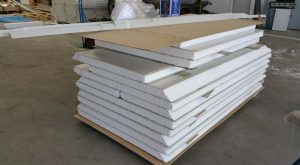
Sandwich panels are prefabricated building components made of three layers:
A rigid insulation core in the middle
Two protective outer metal sheets
The insulation core is typically made from materials such as PIR (polyisocyanurate), PUR (polyurethane), EPS (expanded polystyrene), or mineral wool. These layers are bonded together to create a strong, lightweight panel that provides both thermal insulation and structural integrity.
How Sandwich Panels Work
The key principle behind sandwich panels is thermal resistance. The insulation core slows heat transfer between the cold room interior and the external environment, helping maintain stable low temperatures. The outer metal layers protect the insulation and provide durability against impact, moisture, and corrosion.
Because of their pre-engineered design, sandwich panels are manufactured under controlled conditions, ensuring consistent quality and predictable performance.
Why Sandwich Panels Became the Industry Standard
Sandwich panels became widely adopted in cold storage construction due to their balance of performance, speed, and cost-effectiveness.
Key Advantages of Traditional Sandwich Panels
Excellent thermal insulation performance
Quick and easy installation compared to traditional construction
Lightweight yet structurally strong
Prefabricated for consistent quality
Reduced construction time and labour costs
These benefits made sandwich panels the default choice for cold rooms across industries, especially in logistics and food distribution.
Types of Sandwich Panel Core Materials
Not all sandwich panels perform the same way. The insulation core material plays a major role in efficiency, safety, and durability.
PIR Core Panels – High Performance Standard
PIR (polyisocyanurate) panels are the most advanced form of sandwich panel insulation used today.
High thermal efficiency
Improved fire resistance compared to older foam systems
Suitable for deep freeze environments
Excellent long-term dimensional stability
PIR panels are now the preferred choice for modern cold storage facilities due to their balance of performance and safety.
PUR Core Panels – Reliable and Cost-Effective
PUR (polyurethane) panels offer similar insulation performance to PIR but with slightly lower fire resistance.
Good thermal insulation properties
More affordable than PIR
Suitable for chill rooms and moderate cold storage
Widely used in commercial applications
PUR remains a practical option where cost efficiency is a priority.
EPS Core Panels – Budget Solution
EPS (expanded polystyrene) panels are the most economical option.
Lightweight and easy to install
Suitable for mild temperature storage
Lower insulation performance compared to foam alternatives
Limited fire resistance
EPS is generally used for small-scale or low-demand cold rooms rather than industrial-grade facilities.
Mineral Wool Panels – Fire Safety Focus
Mineral wool (rock wool) sandwich panels prioritise fire resistance over insulation efficiency.
Non-combustible material
Excellent fire safety performance
Good acoustic insulation
Heavier and less thermally efficient
These panels are often used in facilities with strict fire safety regulations.
Are Sandwich Panels Still the Best Choice in 2026?
The answer depends on the application. While sandwich panels remain a dominant solution, their position as the “best” choice is now more context-dependent.
Where Sandwich Panels Still Excel
Sandwich panels remain highly effective in:
Large-scale cold storage warehouses
Food processing and distribution centres
Pharmaceutical storage facilities
Industrial refrigeration rooms
Their speed of installation, thermal efficiency, and cost-effectiveness continue to make them a strong choice.
Technological Improvements in Modern Panels
In 2026, sandwich panel technology has improved significantly:
Better insulation cores with lower thermal conductivity
Improved airtight joint systems
Enhanced fire resistance standards
More durable and hygienic surface coatings
Reduced thermal bridging through precision manufacturing
These improvements have strengthened their relevance rather than replaced them.
Limitations of Sandwich Panels
Despite their advantages, sandwich panels do have limitations that must be considered.
1. Structural Constraints
While strong for their weight, sandwich panels are not designed to replace heavy structural walls. They often require supporting frames in large installations.
2. Fire Safety Requirements
Although modern PIR panels have improved fire resistance, they may still not meet the strictest fire safety requirements compared to mineral wool systems.
3. Long-Term Damage Risks
If not properly installed or maintained, sandwich panels can suffer from:
Joint leakage
Moisture ingress
Surface corrosion
Insulation degradation over time
Proper installation is critical to long-term performance.
Energy Efficiency and Performance in Cold Rooms
Sandwich panels play a major role in controlling energy consumption in refrigeration systems.
Thermal Insulation Performance
The insulation core determines efficiency:
PIR: Highest efficiency and lowest heat transfer
PUR: Strong performance with slightly higher energy loss
EPS: Moderate efficiency
Mineral wool: Lower thermal efficiency but superior fire resistance
Better insulation reduces compressor workload and lowers electricity consumption.
Airtight Construction and Energy Loss
Modern sandwich panels use interlocking systems such as tongue-and-groove or cam-lock joints to reduce air leakage. Airtight construction is essential in preventing:
Cold air escape
Warm air infiltration
Condensation formation
Even small gaps can significantly increase energy costs over time.
Installation and Construction Advantages
One of the main reasons sandwich panels remain popular is their ease of installation.
Fast Assembly Process
Compared to traditional brick or concrete construction, sandwich panels:
Reduce construction time significantly
Require less labour
Allow for modular expansion
Minimise on-site disruption
This makes them ideal for industries needing fast deployment of cold storage facilities.
Flexibility and Modularity
Modern sandwich panel systems allow:
Easy relocation of cold rooms
Scalable expansion
Flexible internal layouts
This adaptability is particularly valuable in logistics and warehousing industries.
Future of Sandwich Panels in Cold Storage
Rather than being replaced, sandwich panels are evolving.
Smarter Manufacturing Techniques
In 2026, manufacturers are using advanced production methods to improve:
Panel precision
Insulation consistency
Structural integrity
Sustainability of materials
Integration with Smart Cold Storage Systems
Modern cold rooms increasingly integrate sensors and monitoring systems within panel structures to track:
Temperature stability
Humidity levels
Energy efficiency performance
This integration improves operational control and maintenance planning.
Conclusion
Sandwich panels remain one of the most widely used and effective solutions for cold room construction in 2026. Their combination of thermal efficiency, fast installation, and structural versatility keeps them highly relevant across multiple industries.
However, they are no longer the only or automatically “best” option in every situation. Alternatives such as advanced PIR systems, hybrid insulation technologies, and fire-rated mineral wool panels now compete in specific use cases.
Ultimately, sandwich panels are still a top-tier choice for most cold storage applications—but the “best” choice depends on temperature requirements, fire safety standards, budget, and long-term operational goals.
Recent Comments