
Best Insulated Wall Panels for Cold Storage Rooms in 2026
Cold storage rooms depend heavily on their wall systems to maintain stable low temperatures, prevent energy loss, and protect temperature-sensitive goods such as food, pharmaceuticals, and chemicals. In 2026, insulated wall panel technology has become more advanced, focusing on higher energy efficiency, improved fire resistance, and better moisture control. Choosing the right insulated wall panel is now about long-term performance, not just initial installation cost.
This article explores the best insulated wall panels for cold storage rooms in 2026 and explains how to select the right system for different applications.
Why Insulated Wall Panels Are Critical in Cold Storage
Cold storage environments typically operate between 0°C and -40°C. Without proper insulation, heat transfer through walls forces refrigeration systems to work harder, increasing energy consumption and operational costs.
Key Roles of Wall Panels in Cold Rooms
Insulated wall panels are designed to:
Reduce heat transfer between inside and outside environments
Maintain stable internal temperatures
Improve energy efficiency and reduce operating costs
Prevent condensation and moisture buildup
Support hygiene requirements in regulated industries
Modern cold room panels are usually made as sandwich structures, with a rigid insulation core placed between two protective metal sheets. This structure provides both insulation and structural strength.
Main Types of Insulated Wall Panels in 2026
There are four primary insulation materials used in cold storage wall panels today: PIR, PUR, EPS, and mineral wool. Each has specific strengths depending on performance needs and budget.
PIR (Polyisocyanurate) Panels – Best Overall Performance
PIR panels are widely regarded as the most advanced insulation option for cold storage walls.
Key benefits include:
Very low thermal conductivity, offering excellent insulation performance
High resistance to temperature extremes
Improved fire resistance compared to older foam systems
Strong structural stability over time
PIR is commonly used in large-scale cold storage facilities, including logistics hubs, food distribution centres, and pharmaceutical storage rooms. It performs especially well in deep freeze environments where temperatures drop below -20°C.
PUR (Polyurethane) Panels – Balanced Performance and Cost
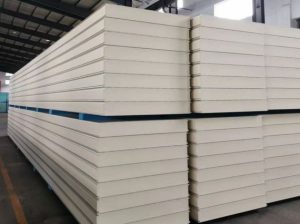
PUR panels offer similar insulation performance to PIR but with slightly lower fire resistance.
Key characteristics include:
Good thermal insulation efficiency
Lower cost compared to PIR panels
Suitable for chillers and standard cold rooms
Moderate fire performance
PUR remains widely used in commercial cold rooms where budget considerations are important but strong insulation is still required.
EPS (Expanded Polystyrene) Panels – Budget Option
EPS panels are the most affordable insulated wall option used in cold storage construction.
Key features include:
Lightweight and easy to install
Cost-effective solution for basic cold storage needs
Suitable for mild temperature applications (above 0°C)
Higher thermal conductivity compared to foam alternatives
However, EPS is less effective in deep freeze environments and offers lower fire resistance. It is best suited for small cold rooms or low-risk storage applications.
Rock Wool (Mineral Wool) Panels – Fire Safety Focus
Rock wool panels are designed for environments where fire resistance is the top priority.
Key benefits include:
Non-combustible material with excellent fire safety performance
Strong acoustic insulation properties
Resistant to high temperatures
Heavier and less thermally efficient than foam-based panels
These panels are often used in industrial facilities where strict fire safety regulations apply.
Important Design Features of Cold Storage Wall Panels
Beyond insulation type, several design factors influence the performance of wall panels.
Panel Thickness
Thickness directly affects insulation performance:
50–80 mm: Suitable for chill rooms (0°C to +8°C)
100–150 mm: Standard cold storage applications
150–200 mm: Deep freeze environments (-20°C or lower)
Thicker panels reduce heat transfer and improve energy efficiency.
Joint Sealing Systems
Modern cold room panels use interlocking systems such as tongue-and-groove or cam-lock mechanisms. These ensure:
Airtight sealing between panels
Reduced risk of cold air leakage
Improved energy efficiency
Better moisture control
Even small gaps can significantly increase cooling costs over time.
Surface Materials and Coatings
Wall panels typically use metal facings such as:
Galvanised steel with protective coatings
Stainless steel for hygiene-sensitive environments
In food and pharmaceutical facilities, antimicrobial and food-safe coatings are increasingly common to support hygiene compliance.
Energy Efficiency and Operational Impact
Insulated wall panels play a major role in controlling energy consumption in cold storage facilities.
Thermal Performance and Energy Savings
Different insulation materials affect energy efficiency:
PIR: Highest efficiency and lowest heat transfer
PUR: Strong efficiency with slightly higher heat loss than PIR
EPS: Moderate performance, suitable for less demanding environments
Rock wool: Lower thermal efficiency but superior fire resistance
Better insulation reduces compressor workload, leading to lower electricity usage and operational costs.
Moisture and Condensation Prevention
Moisture control is critical in cold storage design. Poor insulation can lead to:
Condensation on wall surfaces
Ice formation within joints
Structural deterioration over time
Closed-cell insulation materials like PIR and PUR are highly resistant to moisture absorption, making them ideal for cold environments.
Installation Trends in 2026
Cold storage construction is becoming faster, more modular, and more precise.
Modular Panel Systems
Modern insulated panels are designed for:
Rapid installation and reduced construction time
Easy expansion of cold storage facilities
Flexibility for relocation or redesign
This modular approach is especially valuable for logistics and distribution industries.
Precision Manufacturing
Manufacturing techniques have improved significantly, allowing:
More accurate panel dimensions
Improved airtight sealing
Reduced thermal bridging
Higher consistency in insulation performance
This leads to more reliable and energy-efficient cold storage systems.
How to Choose the Best Insulated Wall Panels
Selecting the right panel system depends on several key factors.
1. Temperature Requirements
Deep freeze (-20°C or lower): PIR recommended
Standard cold storage: PIR or PUR
Mild cooling: PUR or EPS acceptable
2. Fire Safety Standards
Facilities with strict fire regulations may require PIR or rock wool panels depending on compliance needs.
3. Budget Considerations
Most affordable: EPS
Mid-range performance: PUR
Highest performance: PIR
4. Long-Term Durability
Higher-quality panels reduce long-term issues such as:
Energy loss
Moisture damage
Seal degradation
Maintenance costs
Conclusion
In 2026, the best insulated wall panels for cold storage rooms are led by PIR systems due to their excellent thermal efficiency, durability, and fire performance. PUR panels remain a strong mid-range solution, while EPS serves low-cost or low-demand applications. Rock wool panels are essential in environments where fire safety is the top priority.
Choosing the right insulation system depends on your temperature requirements, regulatory obligations, and long-term operational goals. Investing in higher-performance wall panels often results in significant energy savings and improved reliability over the lifespan of the facility.
Recent Comments