
Bi-Parting Doors vs. Traditional Cold Doors
Cold storage facilities depend on reliable doors to maintain temperature-controlled environments while allowing people, equipment, and products to move efficiently. Whether used in food processing, refrigerated warehouses, freezer rooms, or distribution centres, cold storage doors need to balance accessibility, durability, insulation, and temperature management.
Two common options are bi-parting doors and traditional cold storage doors. While both can be designed for refrigerated environments, their configurations offer different advantages depending on the application. Understanding the differences can help businesses choose a door solution that better suits their operational requirements.
What Are Bi-Parting Cold Storage Doors?
Bi-parting cold storage doors feature two door panels that open from the centre, with each panel moving in an opposite direction. This design creates a practical opening for personnel, carts, equipment, and products.
The configuration can be used in a variety of temperature-controlled environments. Depending on the application, bi-parting doors may incorporate insulated panels, durable surfaces, heavy-duty hinges, and specialised sealing systems.
One of the key characteristics of a bi-parting door is its centre-opening design. Instead of one large door panel moving in a single direction, the two panels divide the opening, which can provide convenient access in busy working environments.
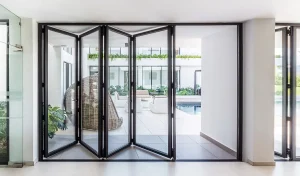
What Are Traditional Cold Storage Doors?
Traditional cold storage doors can refer to several common door configurations used in refrigerated and freezer environments. These may include single-panel hinged doors, sliding doors, or other conventional insulated door systems.
A traditional single hinged cold storage door generally consists of one panel attached to the door frame with hinges. The panel swings open to provide access to the cold room or refrigerated area.
These doors remain a practical option for many applications, particularly where the doorway is relatively small and traffic levels are moderate.
Bi-Parting Doors vs. Traditional Cold Doors: Key Differences
The biggest difference between the two options is their opening configuration. However, access, space requirements, traffic levels, and operating conditions can also influence which solution is most appropriate.
Door Opening
Bi-parting doors divide the opening into two panels. This can make the door easier to operate in certain high-traffic environments, particularly where frequent access is required.
A traditional single hinged door uses one larger panel. Depending on its size, opening the door may require more clearance in front of or behind the doorway.
The best configuration depends on the available space and how the doorway is used throughout the day.
Space Requirements
Available space is an important consideration when selecting a cold storage door. Traditional hinged doors require sufficient clearance for the door panel to swing open.
Bi-parting hinged doors also require operating space, but their two-panel configuration can provide a more flexible opening arrangement. Dividing the door into two sections can be advantageous where a large single panel would be difficult to manage.
Before installation, businesses should assess surrounding walls, equipment, walkways, storage areas, and traffic routes.
Temperature Control Considerations
Maintaining consistent temperatures is a major priority in refrigerated environments. Regardless of the door configuration, insulation and sealing play important roles in reducing unwanted air movement.
Insulation
Both bi-parting and traditional cold doors can incorporate insulated construction. The appropriate level of insulation depends on factors such as the room temperature, door dimensions, operating conditions, and intended application.
A properly insulated door helps create a thermal barrier between the controlled area and the surrounding environment.
Sealing
Door seals help minimise gaps around a closed door. Damaged or poorly fitted seals can allow air to move between the cold storage area and surrounding space.
Both bi-parting and traditional doors can be fitted with appropriate sealing systems. Regular inspection is important to ensure seals remain effective over time.
Access and Workflow
The way a cold storage door is used can have a significant impact on which configuration makes sense.
High-Traffic Areas
Facilities with frequent movement may benefit from a door design that supports quick and convenient access. Bi-parting doors can be particularly useful in areas where employees, carts, and products regularly pass through.
The two-panel design provides a practical access arrangement and can be well suited to busy operational environments.
Lower-Traffic Areas
Traditional hinged cold doors may be a suitable choice for areas where access is less frequent. If employees only need to enter a cold room occasionally, a straightforward single-panel door may provide everything the application requires.
The goal is not necessarily to choose the most complex door available, but to select a configuration that matches actual operational needs.
Durability and Construction
Cold storage doors can be exposed to frequent use, moisture, temperature fluctuations, and accidental impacts from equipment. Door construction should therefore be matched to the demands of the environment.
Bi-Parting Door Durability
Bi-parting doors can be manufactured with robust panels, hinges, handles, seals, and other components. When specified correctly, these features can support reliable operation in demanding commercial environments.
Because the door consists of two panels, each panel and its associated hardware should be suitable for the expected frequency of use.
Traditional Door Durability
Traditional cold storage doors can also offer strong durability when manufactured using appropriate materials and hardware. A single-panel design may be straightforward to maintain, particularly in smaller or less demanding applications.
As with any cold storage door, regular inspection and maintenance can help identify worn components before they affect performance.
Which Door Is Better for Cold Storage?
There is no universal answer. The better choice depends on the requirements of the facility.
Bi-parting doors may be worth considering when a facility requires convenient access, experiences frequent traffic, or has specific space considerations. Their two-panel configuration can provide a practical solution for busy cold storage environments.
Traditional cold doors may be more appropriate for smaller openings, lower-traffic areas, or applications where a simple single-panel configuration meets the facility’s requirements.
Factors to Consider Before Choosing
Businesses should evaluate several factors before deciding between bi-parting and traditional cold storage doors.
Traffic Frequency
Consider how often the door will be opened and closed each day. High-frequency applications may benefit from a configuration designed for repeated operation.
Doorway Dimensions
Measure the width and height of the opening and consider the surrounding space. The available clearance can influence which door configuration is most practical.
Operating Temperature
The required temperature should be considered when selecting insulation, seals, hardware, and other door components. A freezer application may have different requirements from a standard cool room.
Type of Traffic
Think about what will pass through the doorway. Foot traffic, hand carts, pallet jacks, forklifts, and other equipment may require different access arrangements.
Maintenance Requirements
All cold storage doors require appropriate maintenance. Businesses should consider how easily hinges, seals, handles, panels, and other components can be inspected and serviced.
Maintenance for Both Door Types
Regular maintenance can help extend the working life of both bi-parting and traditional cold storage doors. Operators should inspect seals for cracks, gaps, or deterioration and check hinges and other moving components for signs of wear.
Doors should also be checked to ensure they close correctly. A door that does not close fully can compromise the controlled environment and place additional demands on refrigeration equipment.
Cleaning should also form part of routine maintenance, particularly in food storage and processing environments. Cleaning procedures should follow the relevant facility and manufacturer requirements.
Making the Right Choice
When comparing bi-parting doors with traditional cold doors, businesses should focus on the practical needs of the facility rather than simply comparing door styles.
Bi-parting doors can provide excellent access for busy areas and may be particularly beneficial where frequent movement occurs. Traditional cold doors, meanwhile, can offer a straightforward and effective solution for smaller or less frequently accessed spaces.
Factors such as temperature, traffic, available space, doorway dimensions, insulation, sealing, durability, and maintenance should all be considered before making a decision.
Conclusion
Bi-parting doors and traditional cold doors can both provide effective solutions for temperature-controlled environments. The right choice depends on how the door will be used, the available space, and the specific conditions of the cold storage facility.
Bi-parting doors can be a strong option for high-traffic environments where convenient access and practical operation are important. Traditional cold doors may be ideal for smaller openings and applications where a simple hinged configuration is sufficient.
By carefully assessing operational requirements and selecting suitable insulation, seals, hardware, and construction, businesses can choose a cold storage door that supports reliable temperature management, efficient access, and long-term performance.
Recent Comments