
Cutting Costs Without Compromising Temperature Control
Cold storage facilities play a critical role in preserving perishable goods, pharmaceuticals, and other temperature-sensitive products. However, maintaining precise temperature control can be costly due to high energy consumption, equipment maintenance, and operational inefficiencies. The challenge for facility operators is to reduce costs without compromising the integrity of stored products. With strategic planning, technology adoption, and smart operational practices, it is possible to achieve significant savings while maintaining optimal temperature control.
Understanding the Cost Drivers in Cold Storage
Cold storage operations are inherently expensive. Energy costs, equipment depreciation, maintenance, and labor represent the largest portions of a facility’s budget. Refrigeration systems, in particular, account for up to 70% of electricity usage. Other contributing factors include inefficient facility design, poor insulation, and outdated monitoring systems. Identifying the key cost drivers is the first step toward reducing expenses effectively.
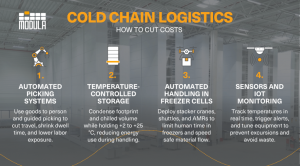
Energy Consumption
Refrigeration compressors, evaporators, and condensers operate continuously to maintain precise temperatures. Inefficient or oversized systems can consume more energy than necessary, increasing operational costs. Understanding energy usage patterns and targeting areas for improvement can lead to substantial savings.
Equipment Maintenance and Repairs
A lack of routine maintenance can lead to system malfunctions, increased energy consumption, and even product loss. Proactive maintenance ensures that equipment operates at peak efficiency, reducing both downtime and costs.
Labor and Operational Inefficiencies
Inefficient workflows, frequent door openings, and poor temperature management practices can contribute to unnecessary expenses. Streamlining operations and training staff on best practices can help reduce waste while maintaining temperature control.
Optimizing Refrigeration Systems
Upgrade to Energy-Efficient Equipment
Modern refrigeration technology is designed to provide precise temperature control while consuming less energy. Variable speed compressors, high-efficiency evaporators, and advanced condensers help facilities reduce electricity usage without affecting performance. While initial investment costs may be higher, long-term savings and reduced maintenance expenses justify the upgrade.
Implement Variable Speed Drives
Variable Speed Drives (VSDs) allow refrigeration motors to adjust their speed according to cooling demand. This reduces unnecessary energy consumption and prevents overcooling, which can be costly and counterproductive.
Routine Maintenance and Monitoring
Regular inspection of compressors, coils, and refrigerant levels ensures that systems run efficiently. Additionally, installing sensors and monitoring software allows operators to detect deviations in temperature and energy use in real time, preventing costly errors.
Enhancing Insulation and Facility Design
High-Quality Insulation
Proper insulation is critical for maintaining stable temperatures and minimizing the workload on refrigeration systems. Investing in high-performance insulation materials for walls, ceilings, and floors can significantly reduce energy consumption.
Seal Air Leaks
Even minor gaps in doors, walls, or loading docks can lead to energy loss. Cold air escaping and warm air entering forces refrigeration systems to work harder. Installing airtight seals, strip curtains, and airlocks can reduce energy waste and maintain consistent temperatures.
Optimized Layout
Organizing storage zones based on temperature requirements helps reduce the frequency of door openings and improves airflow management. Efficient layouts not only preserve temperature consistency but also reduce labor costs.
Smart Temperature Management
Zoned Cooling
Different products require different temperature ranges. Zoned cooling systems allow specific areas to be cooled according to storage requirements, reducing unnecessary energy use and improving product safety.
Monitor and Adjust Temperatures
Overcooling increases energy consumption and may even damage certain products. Automated monitoring systems can adjust temperatures dynamically to match demand without compromising quality.
Reduce Temperature Fluctuations
Maintaining a consistent temperature prevents refrigeration systems from working harder than necessary. Using data analytics and predictive software ensures temperature stability and reduces energy waste.
Implement Energy-Saving Technologies
LED Lighting
LED lighting produces less heat and consumes less energy than traditional lighting, reducing the cooling load on refrigeration systems while improving visibility inside the facility.
Motion Sensors and Automation
Installing motion sensors for lights and equipment ensures they operate only when needed. Automation systems can optimize refrigeration, lighting, and airflow, minimizing energy use without sacrificing performance.
Heat Recovery Systems
Heat recovery technology captures waste heat from refrigeration systems and repurposes it for water heating or space heating, reducing overall energy consumption and operational costs.
Operational Best Practices
Train Employees
Staff behavior has a significant impact on energy use and temperature control. Training employees to follow best practices—such as minimizing door openings, loading efficiently, and reporting anomalies—helps maintain stable conditions while lowering costs.
Strategic Scheduling
Performing high-energy operations, such as defrost cycles or heavy loading, during off-peak hours can reduce energy costs. Scheduling tasks strategically also helps prevent temperature fluctuations.
Regular Audits
Conducting energy and operational audits identifies inefficiencies and areas for improvement. Continuous assessment ensures that cost-saving measures are effective without compromising product quality.
Leveraging Renewable Energy Sources
Solar Panels
Integrating solar energy can offset a portion of a facility’s electricity consumption. Solar panels provide a sustainable energy source and reduce reliance on expensive grid electricity.
Battery Storage Systems
Energy storage systems allow facilities to store electricity generated from renewable sources or off-peak energy for later use. This reduces peak demand charges and lowers operational costs.
Hybrid Energy Solutions
Combining multiple renewable energy sources, such as solar and wind, creates a more reliable and cost-effective energy supply for cold storage operations.
Maintaining Compliance and Quality Standards
Adhere to Regulatory Guidelines
Ensuring compliance with temperature and safety regulations prevents costly fines and product loss. Sustainable operations often align with regulatory requirements, providing additional benefits.
Regular Quality Checks
Routine inspections of stored products help ensure that temperature control measures are effective. Early detection of anomalies prevents waste and preserves product quality.
Continuous Improvement
Cost reduction should not compromise quality. By continuously evaluating systems, processes, and technologies, operators can refine practices to achieve both efficiency and product safety.
Conclusion
Cutting costs in cold storage operations without compromising temperature control is a balancing act that requires strategic planning, technological innovation, and disciplined operational practices. From upgrading refrigeration systems and enhancing insulation to implementing smart monitoring and employee training, there are multiple ways to reduce expenses while maintaining product integrity.
Sustainable cost-saving measures not only improve profitability but also enhance energy efficiency, reduce environmental impact, and ensure compliance with industry standards. Facilities that adopt a holistic approach to cost management and temperature control are better positioned to thrive in an increasingly competitive and sustainability-focused market. By leveraging technology, improving processes, and fostering a culture of efficiency, cold storage operators can achieve optimal performance while keeping costs under control.
Recent Comments