
High-Performance Cold Storage Doors
High-performance cold storage doors are a critical component in modern refrigeration and temperature-controlled facilities. They are designed to maintain strict internal temperatures while allowing efficient access for goods and personnel. In industries such as food distribution, pharmaceuticals, and logistics, even minor temperature fluctuations can lead to product loss, increased energy consumption, and compliance issues.
Unlike standard industrial doors, high-performance cold storage doors are engineered with advanced insulation, airtight sealing systems, and durable construction materials. Their purpose is to minimize heat transfer, reduce energy waste, and ensure long-term operational efficiency.
This article explores what makes cold storage doors “high-performance,” their key features, types, benefits, and considerations for selection and maintenance.
What Are High-Performance Cold Storage Doors?
High-performance cold storage doors are specially engineered access systems used in refrigerated rooms, freezers, and controlled-temperature warehouses. They are designed to withstand extreme temperature differences between the inside and outside environment while maintaining airtight insulation.
Core Purpose and Function
The main function of these doors is to prevent thermal exchange. Every time a door opens, warm air can enter and cold air can escape. High-performance doors are designed to minimize this exchange through fast operation, strong sealing systems, and insulated construction.
They also support workflow efficiency by allowing quick and safe access to storage areas without compromising temperature stability.
Key Construction Materials
High-performance cold storage doors typically use advanced insulation materials such as polyurethane (PU) or polyisocyanurate (PIR) foam cores. These materials offer excellent thermal resistance and structural strength.
The outer surfaces are commonly made from stainless steel, galvanized steel, or aluminum, which provide durability, corrosion resistance, and hygiene compliance in food and pharmaceutical environments.
Key Features of High-Performance Cold Storage Doors
The effectiveness of cold storage doors depends on several technical features that enhance insulation, durability, and usability.
Advanced Thermal Insulation
High-performance doors are built with thick insulation cores that significantly reduce heat transfer. PU and PIR foams are widely used due to their low thermal conductivity and long-lasting performance.
This insulation helps maintain stable internal temperatures even in high-traffic environments.
Airtight Sealing Systems
Sealing is one of the most important aspects of cold storage door performance. High-quality doors use multi-layer gasket systems that create a tight seal when closed.
These seals prevent air leakage, reduce condensation, and help maintain consistent temperature levels inside the cold room.
Fast and Efficient Operation
Many high-performance cold storage doors are designed for rapid opening and closing. This reduces the time the cold room is exposed to external air, minimizing heat infiltration.
Automated sliding systems and rapid roll-up doors are commonly used in high-traffic facilities to improve efficiency.
Types of High-Performance Cold Storage Doors
Different operational environments require different door systems. High-performance cold storage doors come in several types, each suited for specific applications.
High-Performance Sliding Doors
Sliding doors are widely used in industrial cold storage facilities. They move horizontally along a track system, making them ideal for large openings and heavy-duty applications.
These doors are durable, space-efficient, and suitable for warehouses with frequent forklift access.
Rapid Roll-Up Doors
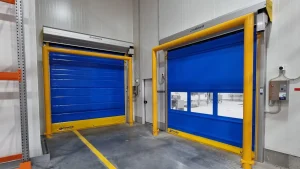
Rapid roll-up doors are designed for high-speed operation. They open and close quickly to minimize air exchange, making them ideal for high-traffic areas.
They are commonly used in logistics centers, food processing plants, and distribution hubs where efficiency is critical.
Insulated Swing (Hinged) Doors
Hinged doors are commonly used in smaller cold rooms or walk-in freezers. They offer strong insulation and simple operation.
While not as fast as sliding or roll-up doors, they provide excellent sealing performance for low-traffic environments.
Benefits of High-Performance Cold Storage Doors
Investing in high-performance cold storage doors offers several long-term advantages for businesses operating temperature-controlled facilities.
Improved Energy Efficiency
One of the biggest benefits is reduced energy consumption. By minimizing heat infiltration, refrigeration systems do not need to work as hard to maintain internal temperatures.
This leads to lower electricity costs and improved sustainability.
Enhanced Product Safety
Stable temperatures are essential for preserving perishable goods. High-performance doors help maintain cold chain integrity, reducing the risk of spoilage or contamination.
This is especially important in industries such as food storage and pharmaceuticals.
Reduced Maintenance Costs
Because these doors are built with durable materials and advanced engineering, they typically require less frequent maintenance. High-quality seals and reinforced components reduce wear and tear over time.
Design Considerations for Cold Storage Doors
Selecting the right cold storage door requires careful evaluation of operational and environmental factors.
Temperature Requirements
Different cold storage environments require different insulation levels. Freezer rooms operating below -20°C need more robust door systems compared to chilled storage facilities.
The door must be selected based on the specific temperature range of the facility.
Traffic Volume and Usage
High-traffic facilities require doors that can withstand frequent opening and closing. In such cases, rapid roll-up or automated sliding doors are often the best choice.
Low-traffic areas may benefit from simpler hinged door systems.
Space Availability
Available space plays an important role in door selection. Sliding doors require wall clearance, while hinged doors need swing space. Roll-up doors are ideal for compact environments.
Installation and Integration
Proper installation is essential for ensuring optimal performance of high-performance cold storage doors.
Seamless Panel Integration
Cold storage buildings are typically constructed using insulated sandwich panels. Doors must be integrated seamlessly into these panels to prevent thermal bridging and air leakage.
Poor installation can significantly reduce energy efficiency.
Alignment and Calibration
Doors must be properly aligned to ensure smooth operation and airtight sealing. Even small misalignments can cause gaps that lead to heat loss or mechanical strain.
Professional calibration ensures long-term reliability.
Maintenance of High-Performance Cold Storage Doors
Regular maintenance is essential for preserving efficiency and extending the lifespan of cold storage doors.
Seal Inspection and Replacement
Door seals should be checked regularly for wear, cracks, or deformation. Damaged seals should be replaced immediately to prevent energy loss.
Mechanical Component Servicing
Hinges, rollers, tracks, and motors should be lubricated and inspected to ensure smooth operation. Cold environments can cause mechanical parts to stiffen or wear more quickly.
Frost and Ice Prevention
In freezer environments, frost can accumulate around door edges. Regular cleaning and anti-frost systems help maintain functionality and prevent damage.
Energy Efficiency and Sustainability
High-performance cold storage doors contribute significantly to energy-efficient building design.
Lower Carbon Footprint
By reducing energy consumption, these doors help decrease greenhouse gas emissions associated with refrigeration systems.
Integration with Smart Systems
Modern cold storage facilities often integrate doors with automated monitoring systems. These systems track door usage, temperature changes, and energy performance in real time.
Conclusion
High-performance cold storage doors are essential for maintaining efficiency, safety, and reliability in temperature-controlled environments. Their advanced insulation, airtight sealing, and durable construction make them a critical investment for any cold storage facility.
By selecting the right door type, ensuring proper installation, and maintaining regular servicing, businesses can significantly improve energy efficiency, reduce operational costs, and protect valuable stored goods. In modern cold chain operations, high-performance doors are not just an accessory—they are a core component of system success.
Recent Comments