
Why Choose Bi-Parting Hinged Doors?
Choosing the right door is an important consideration for cold storage facilities, commercial cool rooms, food processing areas, warehouses, and other temperature-controlled environments. A door needs to provide convenient access while helping maintain the conditions inside the facility.
Bi-parting hinged doors offer a practical solution for applications where frequent access, durability, and temperature management are important. Unlike a conventional single-panel hinged door, a bi-parting design consists of two door panels that open from the centre. This configuration can provide greater flexibility for busy working environments.
What Are Bi-Parting Hinged Doors?
Bi-parting hinged doors are made up of two panels that operate from a central meeting point. When opened, the panels move in opposite directions, creating an accessible doorway.
These doors can be designed for a variety of applications, including cold rooms, freezer rooms, refrigerated warehouses, food processing facilities, distribution centres, and industrial storage areas.
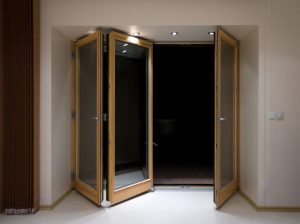
Depending on the application, bi-parting hinged doors can incorporate insulated panels, durable finishes, specialised seals, heavy-duty hinges, and other components designed to withstand regular use.
Why Choose Bi-Parting Hinged Doors?
There are several reasons businesses may choose bi-parting hinged doors over alternative door configurations. Their design can help address common challenges associated with busy cold storage and commercial environments.
1. Convenient Access
One of the primary advantages of bi-parting hinged doors is convenient access. The two-panel design creates an opening from the centre, providing a practical entry and exit point for employees and equipment.
In a busy facility, workers may need to move between different areas throughout the day. A door that is easy to operate can help support a smoother workflow and reduce unnecessary interruptions.
2. Ideal for High-Traffic Areas
Cold storage facilities can experience significant traffic from employees, carts, trolleys, pallet equipment, and other machinery. A door used repeatedly throughout the day needs to be capable of handling frequent operation.
Bi-parting hinged doors can be suitable for these high-traffic areas when specified with appropriate materials and hardware. Their configuration provides a practical access solution for facilities where doors are regularly opened and closed.
3. Improved Temperature Management
Temperature control is essential in cold storage environments. Every time a refrigerated area is opened, warm air can enter while cold air escapes.
A well-designed bi-parting hinged door can help minimise unnecessary exposure when closed. Insulated panels and effective sealing systems can help create a barrier between the controlled environment and surrounding areas.
The door is only one part of an overall temperature management strategy, but choosing an appropriate design can contribute to better operational control.
Benefits of Bi-Parting Hinged Doors
The design of a bi-parting door can provide several practical benefits for commercial and industrial applications.
Durable Construction
Cold storage doors can be exposed to moisture, temperature changes, frequent operation, and accidental contact with equipment. Durability is therefore an important consideration.
Bi-parting hinged doors can be manufactured using materials selected for the demands of the intended environment. Robust panels, hinges, handles, and other components can help support reliable operation over time.
Efficient Use of Space
Door clearance can be an important consideration in warehouses and cold storage facilities. A large single-panel door may require considerable swing space, depending on its configuration.
Because bi-parting hinged doors divide the opening into two panels, they can offer a practical alternative where a large single door panel would be inconvenient. The suitability of the design will depend on the available space and surrounding layout.
Flexible Applications
Bi-parting hinged doors are not limited to a single industry. They can be used in a range of environments where controlled access and durability are required.
Applications may include commercial refrigeration, food storage, food processing, pharmaceutical storage, industrial facilities, refrigerated distribution centres, and other temperature-sensitive environments.
Bi-Parting Doors for Cold Storage
Cold storage applications have specific requirements that need to be considered during door selection.
Insulation
Insulated door panels help reduce heat transfer between the cold storage area and the surrounding environment. The appropriate insulation specification will depend on factors such as the operating temperature and facility requirements.
Freezer rooms may require different insulation characteristics from standard chilled storage areas. The door should therefore be selected according to the intended application.
Sealing
Effective sealing is another important feature. Seals help reduce gaps around the closed door and minimise unwanted air movement.
Over time, seals can become worn or damaged. Regular inspection can help ensure that the door continues to close properly and maintain an effective seal.
Cold-Environment Hardware
Hinges, handles, and other hardware need to be suitable for the environment in which the door will operate. Frequent use and low temperatures can place additional demands on these components.
Selecting appropriate hardware can help support smooth operation and reduce maintenance issues.
Bi-Parting Hinged Doors for Food Processing
Food processing facilities often require efficient movement between refrigerated rooms, production areas, storage spaces, and other parts of the facility.
A suitable bi-parting hinged door can provide convenient access while supporting the separation of temperature-controlled areas. Durable, easy-to-clean surfaces can also be beneficial in environments where hygiene and regular cleaning are important.
When selecting doors for food-related applications, businesses should consider the materials, surface finishes, seals, hardware, and cleaning procedures required for the facility.
How to Choose the Right Bi-Parting Hinged Door
Not every bi-parting hinged door is suitable for every application. Several factors should be assessed before choosing a particular design.
Consider the Operating Temperature
Determine whether the door will be used in a chilled room, freezer, or another controlled environment. The operating temperature can influence insulation, sealing, hardware, and material requirements.
Assess Traffic Levels
Think about how frequently the door will be opened and closed. High-traffic areas may require more durable components and a construction suited to repeated use.
Measure the Opening
The width and height of the doorway should be measured accurately. Available clearance around the opening should also be considered to ensure the door can operate effectively.
Consider What Passes Through the Door
The type of traffic is just as important as its frequency. Foot traffic may require different considerations from forklifts, pallet equipment, carts, or large product loads.
Review Maintenance Requirements
A good door should be practical to maintain. Consider access to hinges, seals, handles, and other components that may require inspection or replacement over the door’s working life.
Maintaining Bi-Parting Hinged Doors
Regular maintenance can help preserve the performance and appearance of a bi-parting hinged door. Facility operators should routinely inspect the door panels, hinges, seals, handles, and other components.
Inspect Seals Regularly
Look for cracks, gaps, hardening, or other signs of deterioration. Damaged seals can reduce the effectiveness of the door and allow unwanted air movement.
Check Door Alignment
Both panels should open and close smoothly and meet correctly at the centre. Misalignment may indicate wear or damage that needs to be addressed.
Keep Components Clean
Cleaning requirements will depend on the facility and application. In food processing and storage environments, maintaining clean door surfaces and hardware can form an important part of overall hygiene procedures.
Are Bi-Parting Hinged Doors Right for Your Facility?
Bi-parting hinged doors can be an excellent option when convenient access, durability, and temperature management are priorities. They are particularly useful in environments where doors are opened frequently and where efficient movement is important.
However, the best door depends on the individual requirements of the facility. Businesses should consider the operating temperature, traffic levels, doorway dimensions, surrounding space, insulation requirements, and maintenance needs before making a decision.
Conclusion
So, why choose bi-parting hinged doors? Their centre-opening design provides convenient access while offering a practical solution for busy commercial and industrial environments. When appropriately specified, they can provide durability, efficient operation, and support for temperature-controlled conditions.
For cold rooms, freezer facilities, food processing areas, and refrigerated warehouses, bi-parting hinged doors can help create a reliable access point that is designed around the demands of the working environment.
By selecting the appropriate insulation, seals, hardware, and construction, businesses can ensure their doors are suited to their specific application. Combined with regular maintenance and responsible operating practices, bi-parting hinged doors can provide a dependable long-term solution for a wide range of cold storage and industrial applications.
Recent Comments