
Bi-Parting Doors for Cold Rooms
Cold rooms are essential for businesses that need to store products at controlled temperatures. From food and beverage facilities to commercial kitchens, supermarkets, warehouses, and distribution centres, these environments depend on reliable refrigeration and effective access systems.
A cold room door plays an important role in maintaining the internal environment. It needs to provide convenient access while helping minimise unwanted temperature changes. Bi-parting doors for cold rooms offer a practical solution, particularly in facilities where regular movement of employees, products, carts, and equipment is required.
With two door panels that open from the centre, bi-parting doors can provide a convenient and durable access point for a wide range of refrigerated environments.
What Are Bi-Parting Doors for Cold Rooms?
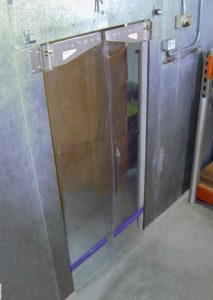
Bi-parting cold room doors consist of two separate panels that open in opposite directions from a central point. Instead of one large panel swinging open, the doorway is divided into two sections.
This design can provide a practical solution where frequent access is required. The doors can be manufactured with insulated panels, appropriate seals, durable surfaces, hinges, handles, and other components suited to cold room applications.
The exact design and specifications will depend on the size of the opening, operating temperature, traffic levels, and requirements of the facility.
Why Are Bi-Parting Doors Suitable for Cold Rooms?
Cold rooms require doors that can perform in temperature-controlled conditions while supporting everyday operational requirements. A door that is difficult to use or poorly suited to the environment can create unnecessary delays and may affect temperature management.
Bi-parting doors can provide a balance between access and environmental control. Their centre-opening configuration is particularly useful in areas where employees and equipment regularly move in and out of refrigerated spaces.
Convenient Access
One of the main advantages of a bi-parting door is convenient access. The two-panel design provides a practical opening for personnel and equipment.
This can be particularly useful in busy cold rooms where workers need to retrieve, store, or transfer products throughout the day. Easy access can help support smoother workflows and reduce unnecessary interruptions.
Suitable for High-Traffic Areas
Some cold rooms experience significantly more traffic than others. Distribution areas, food processing facilities, and commercial storage spaces may have doors opened and closed many times throughout the day.
Bi-parting doors can be specified with durable components to accommodate regular use. Choosing a design that matches the expected traffic level can help support reliable long-term performance.
Temperature Control in Cold Rooms
Maintaining a stable internal temperature is one of the most important requirements of any cold room. When a door opens, warmer air can enter while refrigerated air escapes.
The door itself cannot prevent all temperature changes, but its construction can contribute to better temperature management.
Insulated Door Panels
Insulation helps create a barrier between the cold room and surrounding environment. An appropriately insulated door can help reduce heat transfer when the door is closed.
The required insulation will depend on the application. A standard chilled room may have different requirements from a freezer or low-temperature storage area.
Effective Sealing
Door seals are another important consideration. A suitable seal helps reduce gaps around the door when it is closed, limiting unwanted air movement.
Seals should be selected according to the operating conditions and inspected regularly. Damaged or worn seals can reduce door performance and may need to be replaced.
Applications for Bi-Parting Cold Room Doors
Bi-parting doors can be used in a wide variety of industries where temperature-controlled storage is required.
Food and Beverage Storage
Food and beverage businesses commonly use cold rooms to store fresh, chilled, and frozen products. Reliable access is important because employees may need to move products between storage and preparation areas throughout the day.
A durable bi-parting door can provide a practical access point while supporting the controlled environment inside the cold room.
Commercial Kitchens
Restaurants, catering businesses, hotels, and other hospitality operations may use cold rooms for storing ingredients and prepared products.
Because these environments often involve frequent movement, an easy-to-operate door can help improve workflow. Appropriate surfaces and components can also make cleaning and maintenance more manageable.
Refrigerated Warehouses
Large warehouses may require several cold rooms or temperature-controlled zones. Products can move frequently between storage areas, loading areas, and other parts of the facility.
Bi-parting doors can provide suitable access where traffic levels are high and reliable door operation is required.
Food Processing Facilities
Food processing environments often have strict operational and hygiene requirements. Cold rooms may be used at different stages of production, making reliable access essential.
Door materials, finishes, seals, and hardware should be selected according to the conditions of the facility.
Important Features to Consider
Selecting the right bi-parting door involves more than choosing a two-panel configuration. Several features should be assessed before installation.
Door Size
The size of the cold room opening should be measured carefully. The width and height need to accommodate the expected traffic while fitting within the available structure.
The surrounding area should also be considered to ensure the door can open and close without interfering with equipment or walkways.
Door Hardware
Hinges, handles, latches, and other hardware should be suitable for repeated operation and the temperature conditions of the cold room.
High-traffic applications may require more robust hardware to support frequent use.
Surface Materials
Cold room doors can be exposed to moisture, impacts, cleaning products, and regular handling. Durable surface materials can help protect the door from everyday wear.
In food-related environments, easy-to-clean surfaces may also be an important consideration.
Benefits of Bi-Parting Doors for Cold Rooms
The right door can provide benefits beyond basic access.
Improved Workflow
Efficient access can help employees move products in and out of a cold room more effectively. This can be particularly valuable in facilities where staff regularly retrieve stock or transfer goods.
Durability
A properly specified door can withstand repeated use and the environmental conditions associated with refrigerated storage.
Practical Design
The centre-opening design provides a useful alternative to large single-panel hinged doors. Depending on the facility layout, splitting the opening into two panels can make the door more practical to operate.
Support for Temperature Management
Insulation and effective seals can help reduce unwanted heat transfer and air movement when the door is closed.
Maintaining Bi-Parting Cold Room Doors
Regular maintenance is essential for keeping cold room doors operating effectively. Operators should inspect the door panels, seals, hinges, handles, and other components as part of routine facility maintenance.
Check the Door Seals
Look for cracks, gaps, hardening, or other signs of wear. Damaged seals should be assessed and replaced where necessary.
Inspect Hinges and Hardware
Hinges and other moving components should be checked for signs of damage or unusual movement. The panels should open and close smoothly without excessive resistance.
Keep the Door Clean
Cleaning requirements vary depending on the facility. However, keeping door surfaces, handles, and surrounding areas clean can support hygiene and reliable operation.
Check Door Alignment
Both panels should meet correctly at the centre when closed. Misalignment can affect sealing and may indicate that the hinges or other components require attention.
Choosing the Right Bi-Parting Door
Every cold room has different requirements, so the appropriate door should be selected according to the specific application.
Consider the operating temperature, door dimensions, traffic frequency, type of equipment passing through the opening, available space, insulation requirements, sealing system, and maintenance needs.
It is also important to consider the expected lifespan and usage of the door. A cold room with constant traffic may require a more robust configuration than a small storage room that is accessed only occasionally.
Conclusion
Bi-parting doors for cold rooms can provide a practical combination of accessibility, durability, and temperature management. Their two-panel, centre-opening design makes them particularly suitable for environments where frequent movement of people, products, and equipment is required.
From food processing facilities and commercial kitchens to refrigerated warehouses and distribution centres, bi-parting doors can be adapted to suit a variety of applications.
When selecting a door, businesses should consider insulation, seals, hardware, surface materials, dimensions, operating temperature, and traffic levels. Regular maintenance is equally important for preserving performance and identifying potential problems early.
With the right specification and ongoing care, bi-parting cold room doors can provide a reliable access solution while helping businesses maintain efficient and controlled refrigerated environments.
Recent Comments