
Reducing Refrigeration Costs with Efficient Cold Storage Door Systems
Introduction
Refrigeration is one of the most significant operating expenses for businesses that rely on cold storage facilities. From food processing plants and refrigerated warehouses to pharmaceutical storage areas and distribution centres, maintaining consistent temperatures requires reliable refrigeration equipment and effective insulation. However, refrigeration costs are influenced by more than the performance of cooling systems alone. Cold storage doors also play an important role in controlling heat transfer, preventing unwanted air exchange, and maintaining internal temperatures. Reducing Refrigeration Costs with Efficient Cold Storage Door Systems
An inefficient door system can allow warm air to enter and cold air to escape, forcing refrigeration equipment to work harder to maintain the required conditions. Over time, this can contribute to increased electricity consumption, additional maintenance requirements, and unnecessary operating expenses.
Investing in efficient cold storage door systems is one way businesses can support better temperature control and improve overall energy performance. By choosing appropriate doors, maintaining effective seals, and implementing practical operating procedures, facilities can reduce avoidable refrigeration demand while maintaining convenient access for daily operations.
Understanding How Cold Storage Doors Affect Refrigeration Costs
Heat Transfer Through Door Panels
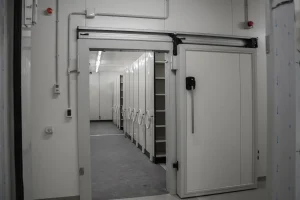
Cold storage facilities are designed to maintain temperatures significantly lower than their surrounding environments. When heat passes through poorly insulated door panels, the refrigeration system must remove that additional heat to maintain the required temperature.
The quality of the insulation, panel thickness, frame construction, and overall door design all influence thermal performance. Doors with suitable insulation can help reduce heat transfer between the cold room and the surrounding area.
Selecting a door system designed for the intended temperature range is particularly important in freezer rooms, chilled storage facilities, and industrial refrigeration environments. The complete door assembly should be assessed, as frames, edges, and hardware can also contribute to heat transfer.
Air Leakage and Temperature Fluctuations
Air leakage is another factor that can increase refrigeration demand. Gaps around door frames, damaged gaskets, and poorly aligned panels can allow warm air to enter even when a door is closed.
When warmer air enters a cold room, the refrigeration system must remove the additional heat. In humid environments, incoming air can also introduce moisture, potentially contributing to condensation, frost, and ice formation.
Maintaining effective door seals and ensuring that doors close correctly can help limit unwanted air infiltration. These measures are particularly valuable in facilities where temperature stability and energy efficiency are operational priorities.
The Impact of Frequent Door Openings
Every time a cold storage door opens, air can move between the refrigerated space and its surroundings. The amount of heat introduced depends on factors such as the opening size, duration, frequency of use, and temperature difference between the two areas.
Facilities with high levels of employee, trolley, or pallet movement may experience substantial air exchange throughout the day. Choosing a suitable door configuration and improving traffic management can help minimise unnecessary exposure of the cold room to warmer air.
Choosing Efficient Cold Storage Door Systems
Insulated Hinged Doors
Insulated hinged doors are commonly considered for cold rooms and refrigerated storage areas that require dependable access and effective temperature separation. Their performance depends on insulation quality, perimeter sealing, frame design, and the ability to close securely after use.
For businesses operating chilled or frozen storage facilities, selecting a hinged door designed for the specific application can help reduce unwanted heat transfer. Durable construction and suitable hardware are also important for maintaining reliable performance under repeated daily use.
Bi-Parting Hinged Doors
Bi-parting hinged doors can provide a practical access solution in environments where the opening configuration suits the movement of personnel, goods, or equipment. Depending on the design, the door sections may allow different access arrangements for particular tasks.
When fitted with appropriate insulation and effective seals, these systems can support temperature control while providing convenient access. Where the configuration permits only the necessary section to be opened, it may also help limit the exposed opening area during certain activities.
However, the actual energy benefit depends on the door’s construction and how it is used. Businesses should evaluate the specifications, sealing performance, opening requirements, and suitability of the system for the intended cold storage environment.
Matching Door Specifications to Storage Requirements
Not every cold storage application has the same operating requirements. A chilled food storage room may require different specifications from a low-temperature freezer or a high-traffic distribution facility.
Before choosing a door system, consider the required internal temperature, frequency of access, opening dimensions, cleaning requirements, and expected operating conditions. Selecting a door that matches these factors can help avoid premature wear and performance issues.
Practical Ways to Reduce Refrigeration Costs
Maintain Effective Door Seals
Door seals are essential for limiting unwanted air movement around closed doors. Over time, gaskets can become worn, compressed, cracked, or damaged, reducing their ability to maintain a consistent seal.
Regular inspections should identify gaps, loose components, and signs of deterioration. Replacing damaged gaskets and correcting alignment problems can help restore the intended performance of the door system.
Reduce the Time Doors Remain Open
Operational procedures can have a meaningful influence on refrigeration efficiency. Employees should be encouraged to close doors promptly after accessing stored products or moving equipment.
Organising frequently used items near suitable access points, coordinating deliveries, and planning material movements can help reduce unnecessary door openings. In busy facilities, reviewing traffic patterns may identify opportunities to improve workflow while limiting unwanted air exchange.
Schedule Preventive Maintenance
Regular maintenance helps ensure that cold storage doors continue to operate as intended. Hinges, handles, frames, seals, and closing mechanisms should be checked for wear, damage, or misalignment.
Preventive maintenance can help identify minor problems before they develop into more significant performance issues. It also supports reliable operation and can extend the useful service life of door components.
Monitor Energy Consumption
Monitoring electricity use can help businesses understand how efficiently their refrigeration systems operate. Reviewing energy consumption alongside room temperatures, maintenance records, and door usage may reveal patterns that require attention.
Where a door replacement or upgrade is being considered, establishing a baseline before the work begins can make it easier to evaluate the results. Comparisons should account for changes in production levels, outdoor temperatures, storage conditions, and other factors that affect refrigeration demand.
Additional Benefits of Efficient Cold Storage Doors
Improved Temperature Stability
Efficient door systems can help reduce unwanted heat transfer and air infiltration, supporting more consistent temperatures within refrigerated spaces. This is important for businesses handling perishable foods, temperature-sensitive ingredients, and other products that require controlled storage conditions.
Stable temperatures depend on the complete refrigeration system, but properly specified and maintained doors can contribute to effective temperature management.
Better Hygiene and Operational Reliability
Cold storage doors used in food production and processing environments should suit the facility’s cleaning procedures and hygiene requirements. Durable surfaces, appropriate hardware, and accessible maintenance points can support routine cleaning and reliable operation.
Businesses should select materials and door designs appropriate for the environment, including any exposure to moisture, cleaning chemicals, or low temperatures.
Potential Long-Term Cost Benefits
Although an efficient door system may involve an upfront investment, its overall value should be assessed over its expected service life. Insulation performance, durability, maintenance requirements, and suitability for daily operations can all influence long-term costs.
Potential energy savings will vary depending on the condition of the existing door, usage patterns, refrigeration equipment, and operating environment. A professional assessment can help businesses determine which improvements are most likely to provide worthwhile results.
How to Select the Right Cold Storage Door Supplier
Evaluate Product Quality and Specifications
Choose a supplier that can provide clear information about insulation, sealing, construction materials, hardware, and suitability for the required operating temperatures. Product specifications should support the facility’s technical and operational needs.
Consider Installation and Ongoing Support
Even a high-quality door can underperform if it is installed incorrectly. Proper alignment, frame fitting, sealing, and commissioning are essential for achieving the intended results.
It is also worth considering the availability of replacement seals, hardware, and maintenance support. These factors can help minimise disruption and maintain reliable door performance over time.
Conclusion
Reducing refrigeration costs requires a comprehensive approach to energy management, and efficient cold storage door systems can be an important part of that strategy. Well-insulated panels, effective seals, appropriate door configurations, and correct installation can help limit unwanted heat transfer and air exchange.
Businesses can further improve performance by maintaining door components, minimising unnecessary openings, monitoring energy consumption, and choosing systems suited to their storage requirements.
Although no single door solution guarantees a specific reduction in electricity costs, investing in suitable cold storage doors can support temperature stability, operational reliability, and better management of refrigeration demand.
By combining effective door design with regular maintenance and efficient operating practices, businesses can work towards more reliable cold storage performance and better control over long-term operating expenses.
Recent Comments